


Keynote Speakers
Martin Banks
University of California, Berekely, United States
How gaze direction and dynamics affect visual resolution
Humans exhibit machine-like eye movements in space and time while performing demanding acuity tasks. To these, we used an adaptive-optics imaging and display system to present ultra-sharp Vernier acuity stimuli briefly every two seconds while simultaneously measuring eye movements, including precisely where on the retina each stimulus fell. We found that drifts and microsaccades combined to confine the landing location of the anticipated stimulus to a tiny retinal region centered on the preferred retinal locus (PRL). The variance of landing location was smallest at the time of stimulus presentation and a few hundred milliseconds after. We correlated where the stimulus fell in space and time with correct or incorrect responses. The PRL and a small area around it, including the anatomical fovea, conferred the best acuity. Acuity declined consistently in the rare events in which the stimulus fell more than 7–10minarc from the PRL. We also found that acuity was best when the last microsaccade occurred sufficiently prior to stimulus presentation. Our findings reveal a highly evolved oculomotor system where gaze direction during fixation is rarely far enough from the PRL to compromise visual resolution when a person makes natural fixational eye movements.
Curriculum vitae
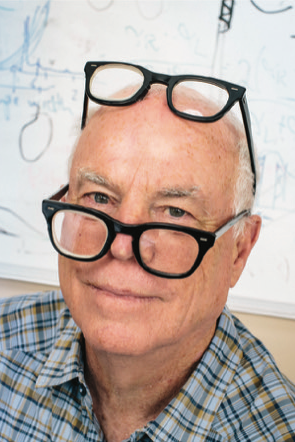
Martin Banks is a distinguished Professor Emeritus at the UC Berkeley School of Optometry, renowned for his pioneering research in human visual development, visual space perception, and multi-sensory integration, particularly how we perceive depth and motion, with significant applied work in virtual reality (VR) and advanced displays, earning him election to the American National Academy of Sciences. He received a B.A. in Psychology from Occidental College in 1970, M.S. in Experimental Psychology from UC San Diego in 1973, and PhD in Developmental Psychology from the University of Minnesota in 1976. Martin Banks received a number of notable awards, among them the McCandless Award, American Psychological Association; Koffka Medal, Giessen University; Holgate Fellow, Durham University; Fellow, American Association for the Advancement of Science; Fellow, American Psychological Society; Prentice Award, American Academy of Optometry; Honorary Professor, University of Wales; Borish Scholar, Indiana Univ; Schade Prize, Society for Information Display, and Tillyer Award from the Optical Society of America.
Anne Böckler-Raettig
Julius-Maximilians-Universität Würzburg, Germany
Flexibly integrated or flatly ignored: Emotional context in gaze processing and behavior
Gaze direction is an important social signal that structures conversations and supports joint actions. Recent studies, including our own, have pointed towards the role of context in gaze processing and behavior, showing, for instance, that basic attention capture by direct gaze is systematically modulated by the emotional expression of the face. Similarly, the effects of eye contact on person evaluation and subsequent cooperation in more naturalistic conversation settings depended on the emotional dynamics of the interaction. Contrasting with these findings of context-sensitivity, however, (our) other studies suggest stability: When listening to narrations of autobiographical experiences, participants’ empathy and perspective taking were largely independent of narrators’ gaze behavior (and even visibility of their eyes). Relatedly, during real-life dyadic conversations, spontaneous gaze behavior (tracked with mobile glasses), seemed surprisingly stable to emotional context factors (e.g., the topic of the conversation). In an attempt to reconcile these seemingly contradictory patterns, I will propose a (preliminary) categorization of factors and demands that influence whether and how context-information is integrated or ignored when interpreting and using gaze cues.

Curriculum vitae
Anne Böckler-Raettig is a Professor for Research Methods and Social Cognition at the University of Würzburg. She studied Psychology at the Humbold Universität zu Berlin and at Glasgow University, and received her PhD from Radboud Universiteit Nijmegen in 2013, having worked on joint action and joint attention. After a visiting stay at Princeton University and a PostDoc at the Max Planck Institute for Human Cognitive and Brain Sciences in Leipzig, Anne was assigned a Junior Professorship for Psychology at the University of Würzburg. She started an Emmy Noether Research Group (“More than meets the eye”) in 2018, moved to Assistant Professor at Leibniz University Hanover, and received a Full Professorship in Würzburg in 2021. Anne is interested in direct gaze, its integration with context information and contribution to social affect, cognition, and behavior. More recently, Anne’s group started addressing the processing and employment of gaze signals in different conversation settings.
Ignace Hooge
Utrecht University, The Netherlands
Wearable eye tracking
Wearable eye tracking has matured over the past 15 years. Not only have wearable eye trackers become better, smaller, and faster, but there has also been substantial progress in the processing of wearable eye tracking data, driven in part by advances in artificial intelligence and machine learning. As a result, eye tracking now appears applicable in a wider range of settings, from classrooms and aircraft cockpits to human interaction.
In this keynote, I will highlight the potential of wearable eye tracking for investigating behavior in the wild. At the same time, I will critically examine the idea that various complex problems, such as area-of-interest production and the annotation of stimuli and behavior, can be easily solved with technical solutions.

Curriculum vitae
Ignace Hooge (1966) studied experimental physics and obtained his PhD in 1996. He has been involved in eye-tracking research since the nineties and has extensive hands-on experience with a wide range of eye-tracking methodologies, including scleral search coils, video-based systems, retinal eye tracking and wearable eye trackers. This long-standing technical expertise has allowed him to contribute both to methodological developments and to innovative applications of eye-tracking technology.
Currently, Ignace Hooge is an associate professor of experimental psychology at Utrecht University. In addition to his academic research and teaching responsibilities, he has substantial experience in applied eye-tracking research, collaborating with industry and other non-academic partners. His research interests are broad and interdisciplinary, encompassing oculomotor control, visual perception, attention, visual search, and applied cognitive psychology. He is particularly interested in how eye movements reflect underlying cognitive processes in both laboratory and real-world settings.
Johanna Kaakinen
University of Turku, Finland
Eye tracking as a window to a reader’s soul
Early eye-movement research on reading focused on how readers process long, naturalistic text passages. Over time, however, the field’s focus shifted toward more tightly controlled text materials and the reading of single sentences. Recently, interest in naturalistic reading has resurged, driven by the notion that some of the reading-related cognitive processes may be different when words are read as a part of longer, connected discourse.
In my research, I have primarily used longer, naturalistic texts, an approach that offers clear ecological benefits but also introduces methodological challenges. With my colleagues, we have examined how readers’ attention fluctuates over the course of reading. Our most recent from work focuses on how subjective reading experiences—including emotional reactions, transportation into the story world, and mind-wandering—are reflected in reading behavior as measured through eye tracking. In my talk, I will review key findings from studies using longer naturalistic texts and discuss what eye-movement measures can—and cannot—reveal about readers’ mental states. I will evaluate the promise and limits of eye tracking as a tool for understanding the reader’s mind: whether it can truly serve as a window to a reader’s soul.

Curriculum vitae
Johanna K. Kaakinen is professor of psychology at the University of Turku. She received her PhD in psychology from the University of Turku in 2004. Her research has mainly focused on reading of naturalistic texts, which she has studied with eye tracking. She is currently leading an EU-funded research consortium EYE-TEACH, which explores the possibilities of using eye tracking in combination with artificial intelligence to support reading comprehension.
Christoph Völter
Max-Planck-Institute for Evolutionary Anthropology, Leipzig, Germany
Eye Tracking in Canine and Primate Cognition Research
Eye tracking provides a non-invasive method for investigating cognition across species by revealing how animals allocate attention and respond to events that potentially violate their expectations. This talk synthesizes recent eye-tracking research with pet dogs and great apes to explore how these species process physical events, cues of agency, and communicative signals. With dogs, we investigated how ostensive human communication modulates object encoding in a violation-of-expectation paradigm. Similar to human infants, dogs selectively showed enhanced memory for object identity, but not location, following direct eye contact. Mobile eye tracking during real-world interactions reveals that the combination of pointing and head turns most effectively directs dogs’ visual attention to a referent, exceeding the influence of non-communicative directional cues. Further studies indicate that dogs form implicit expectations about occlusion and launching events, show limited sensitivity to gravity-related violations, and orient toward motion cues associated with animacy, such as self-propelled movement and variable speed. Ongoing eye-tracking studies with great apes investigate agency attribution and action understanding. Using modified Frith–Happé animations and goal-based action-prediction paradigms, we examine whether adult humans and nonhuman apes differentiate between non-interactive motion, goal-directed and mentalistic interactions, and whether agency cues enable intention attribution to unfamiliar agents. Together, this work highlights the potential of eye tracking to uncover shared and species-specific cognitive mechanisms across dogs, nonhuman apes, and humans.

Curriculum vitae
Christoph Völter is a research group leader in the Department of Comparative Cultural Psychology, Max Planck Institute for Evolutionary Anthropology in Leipzig and a senior postdoc at the Messerli Research Institute, University of Veterinary Medicine Vienna. He investigates the evolutionary and developmental origins of cognitive abilities using comparative approaches, focusing on dogs, nonhuman great apes, and human children. After completing his PhD at the Max Planck Institute for Evolutionary Anthropology in 2014, he was a Research Fellow and Associate Lecturer at the University of St Andrews before joining the Messerli Research Institute in 2019.