
New F3 website
Welcome to our new website!


Fahrer - Fahrzeug - Forschung
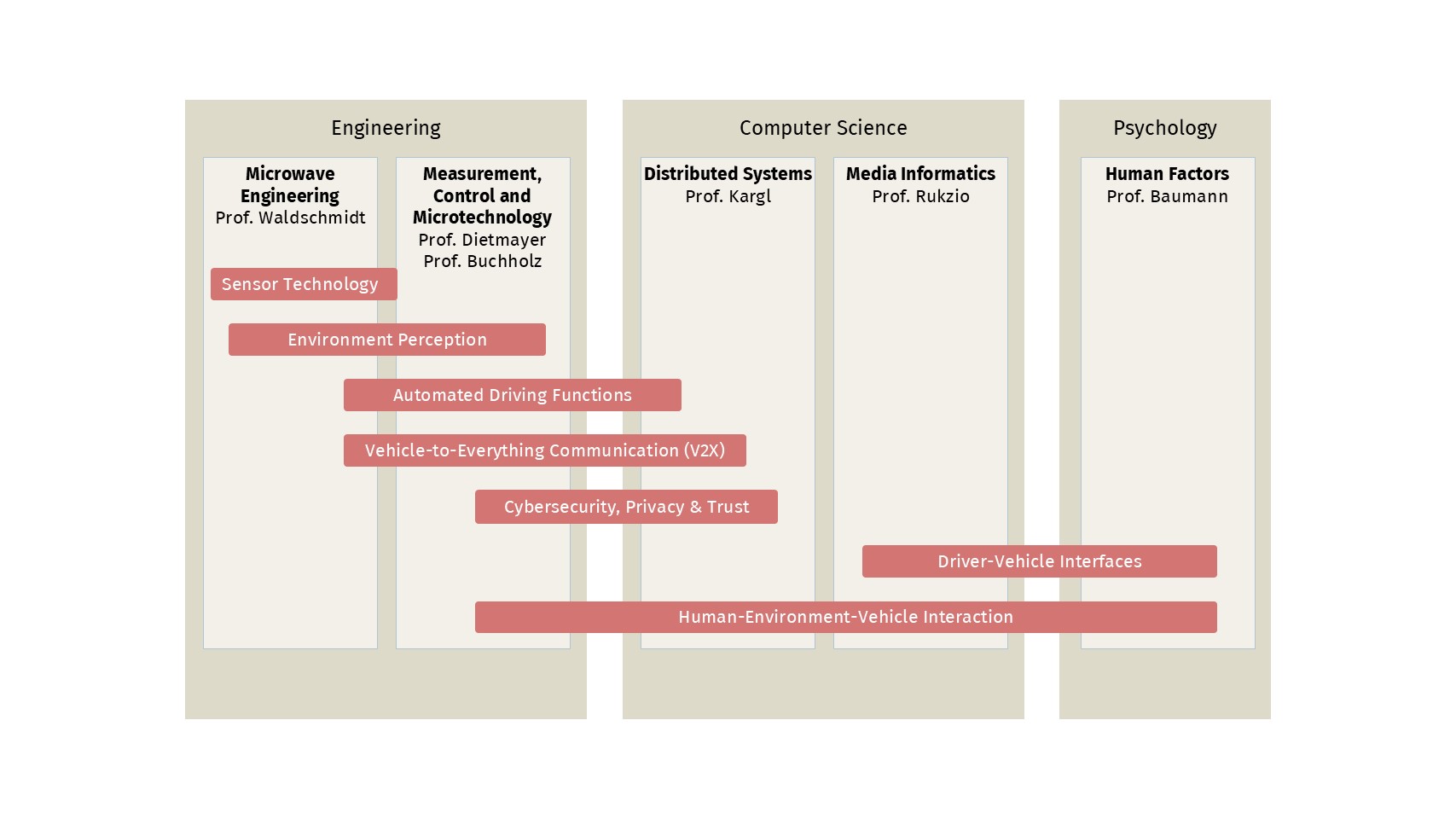
In F3, scientists at the University of Ulm are pursuing the vision of future automated vehicles that move cooperatively with other vehicles, including those driven manually by humans, in an intelligent transport infrastructure, offering maximum safety for both their own occupants and all other road users and contributing to local and global transport efficiency.
F3 brings together the expertise of participating researchers from the fields of engineering, computer science, and psychology in the areas of driver assistance, automated driving, and cooperative driving functions. In a unique way, all relevant topics, from sensor technology to psychology, are covered by a single point of contact, and resources such as test vehicles, driving simulators, and research laboratories are combined.
Founded in 2014 as the first structural implementation of the research structure application approved in 2013 by the Carl Zeiss Foundation entitled ‘Forschungszentrums für kooperative, hochautomatisierte Fahrerassistenzsysteme und Fahrfunktionen (F3)’, it has already been successfully extended twice at the University of Ulm, in 2019 and 2024. The successful work of the participating researchers and institutes in the past period from 2019 to 2024 has yielded numerous valuable insights, which are reflected in a series of key figures: for example, during the period mentioned, the F3 partners published over 420 papers at conferences and in international journals in the F3 research area. With 54 successfully completed doctorates, future research tasks in related areas can be strengthened. Nearly 30 third-party funded projects with a total funding volume of over €20 million were acquired.
We are exploring the future of automated vehicles and developing innovative solutions that increase safety and enhance traffic efficiency.

Contact person
Prof. Dr. Martin Baumann
Institute of Psychology and Education
Dept. Human Factors
Phone: +49 731 50-26500
e-mail: martin.baumann(at)uni-ulm.de
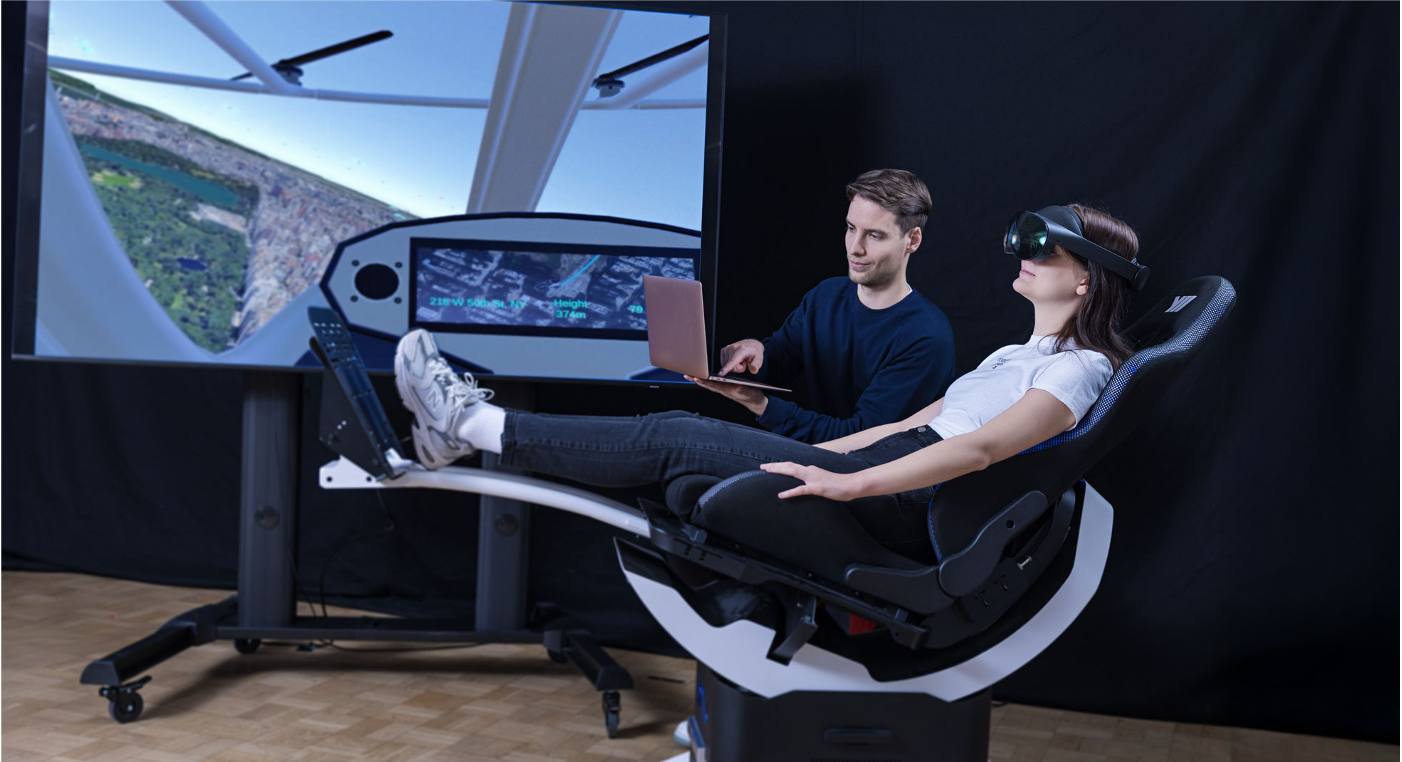
Media Informatics
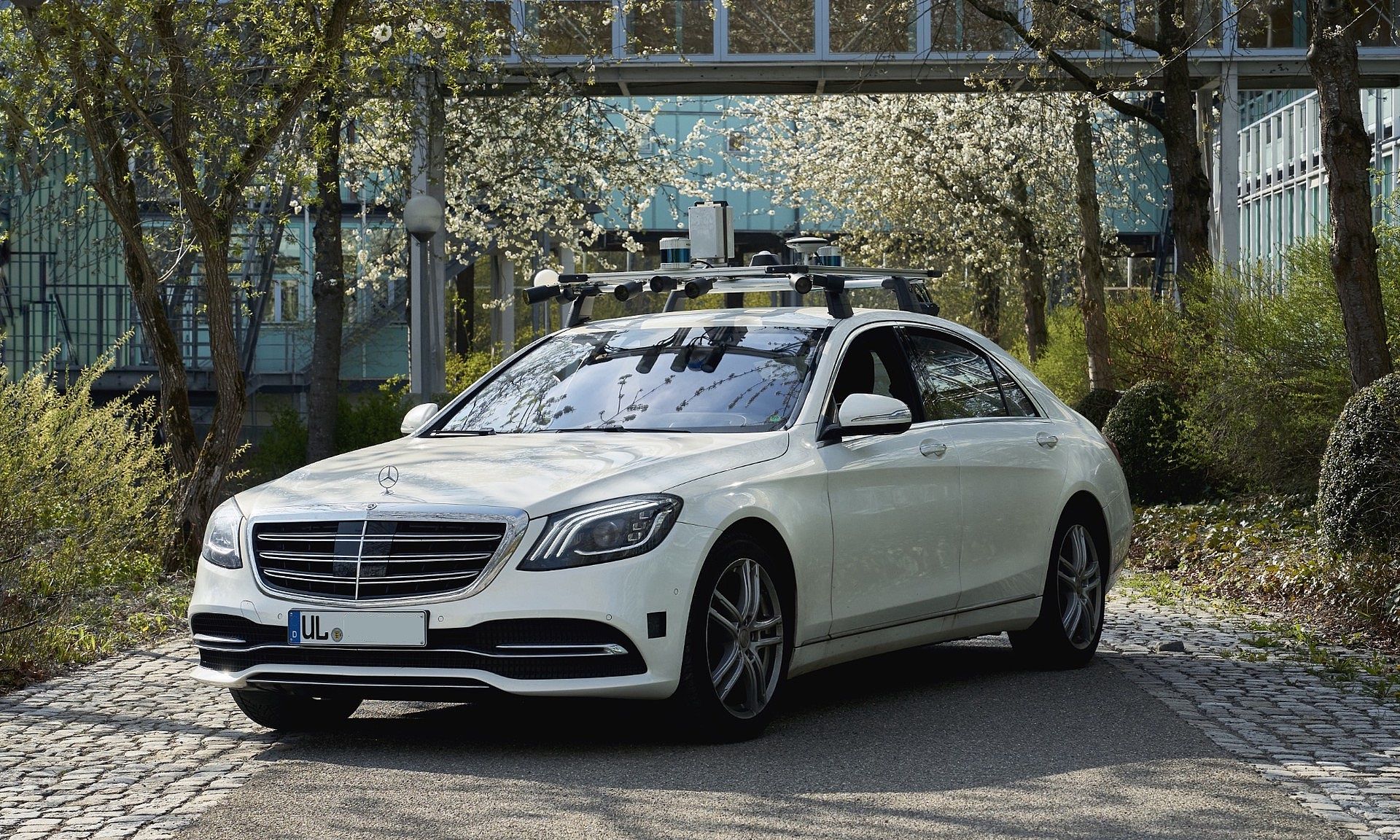
Measurement, Control and Microtechnology
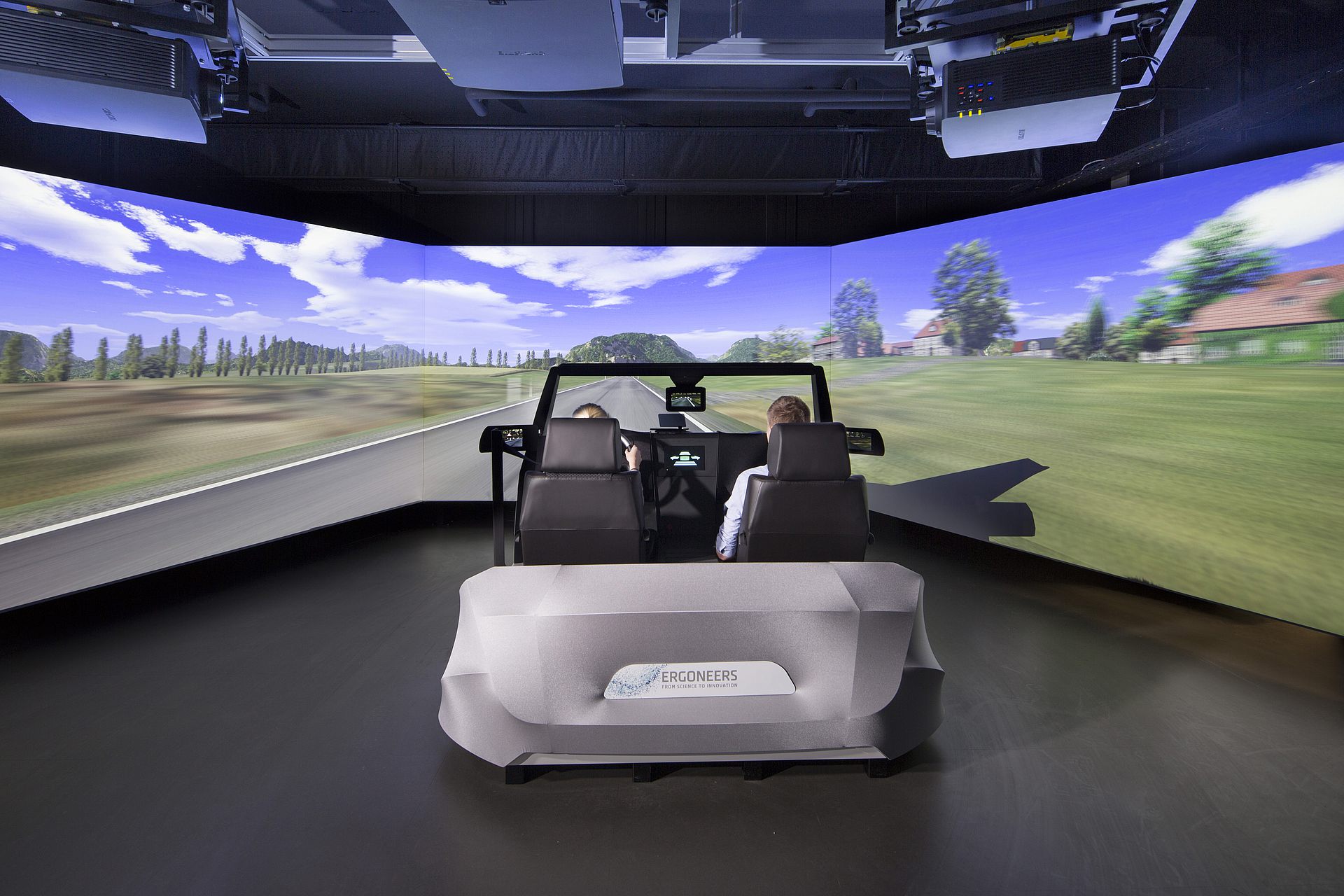
Human Factors Lab
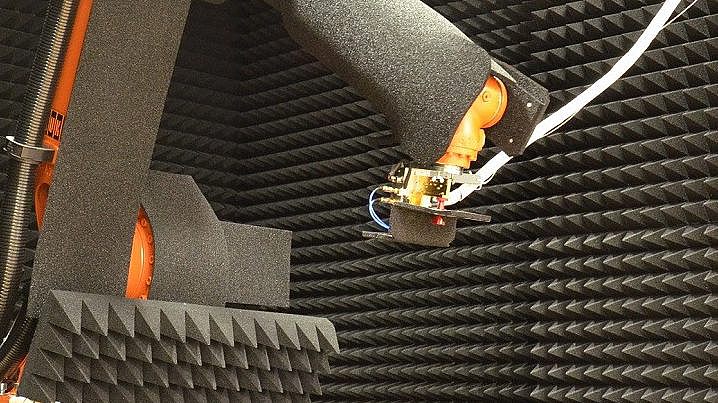
Microwave Engineering
In F3, we explore a wide range of topics. Examples of current projects and research topics include: