International Office
Helmholtzstraße 22
89081 Ulm
InnovateU: The Campus Hackathon
20–21 November 2026 · KICU Ulm · Friday kick-off at 16:00
A real challenge, an interdisciplinary team and 24 hours to work on your ideas. At InnovateU, you develop solutions to questions from companies and present your results in a final pitch.
Students from all disciplines are welcome, both national and international. Bring your perspective and meet people who want to build something with you.
Turn your ideas into reality – and €4,000 in prize money is waiting for the winning teams!
When and where?
- Start: Friday, 20 November 2026, 16:00
- End: Saturday, 21 November 2026, 17:00
- Venue: KICU Ulm, Lise-Meitner-Straße 10/1, 89081 Ulm
- Format: a 24-hour hackathon with teamwork, company support and final presentations
Who can take part?
- Computer science, natural sciences, engineering, business, psychology or design: different skills help teams approach a challenge from several angles. Teams are formed and matched to challenges on site.
- Depending on the challenge, you can code, develop concepts, design workflows or prepare the pitch. The ORTSBEREIT challenge specifically includes a role that requires no coding skills.
24 hours to innovate. A total prize pool of €4,000. Are you ready for the challenges?
BMW: AI for autonomous driving
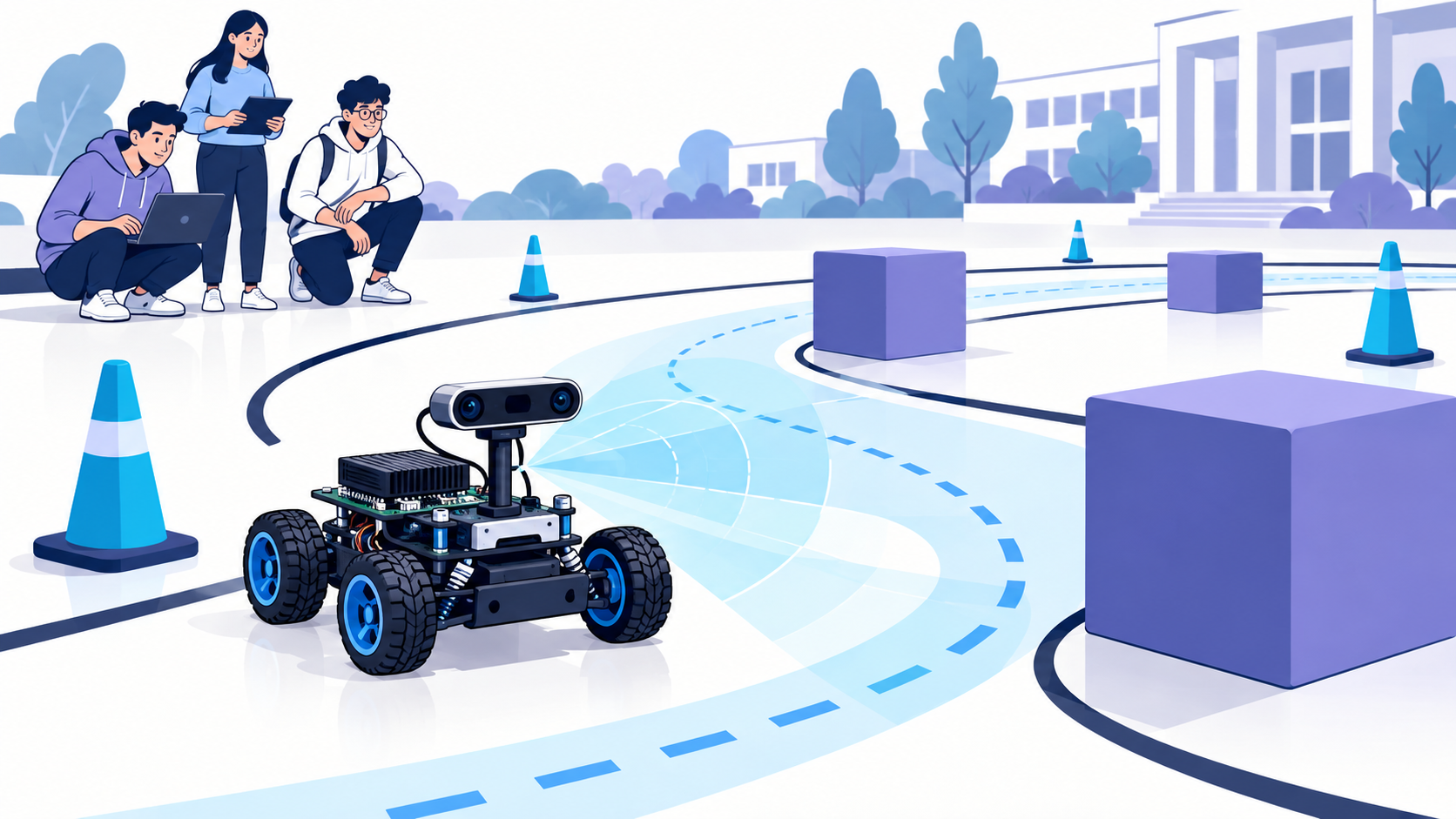
Turn a converted BMW-branded ride-on car into an autonomous robotics prototype. Explore how a vehicle can perceive its surroundings and respond using software-controlled driving and steering.
Your task
Choose a use case such as autonomous lap driving, obstacle avoidance, visual track following or voice control. Develop the logic, test your approach and explain how the vehicle responds to sensor input.
What you get
BMW provides the vehicle, a documented SDK and on-site engineering support. The platform includes a depth camera, an NVIDIA Jetson Orin Nano, steering control and wheel odometry. Its ROS software stack includes localisation, mapping and sensor fusion.
Expected result
Present a working demonstration of your chosen AI use case. Explain your implementation, show what you tested and describe the limitations and next steps. The SDK lets your team focus on the application without first integrating the hardware.
ORTSBEREIT: Blackout Station
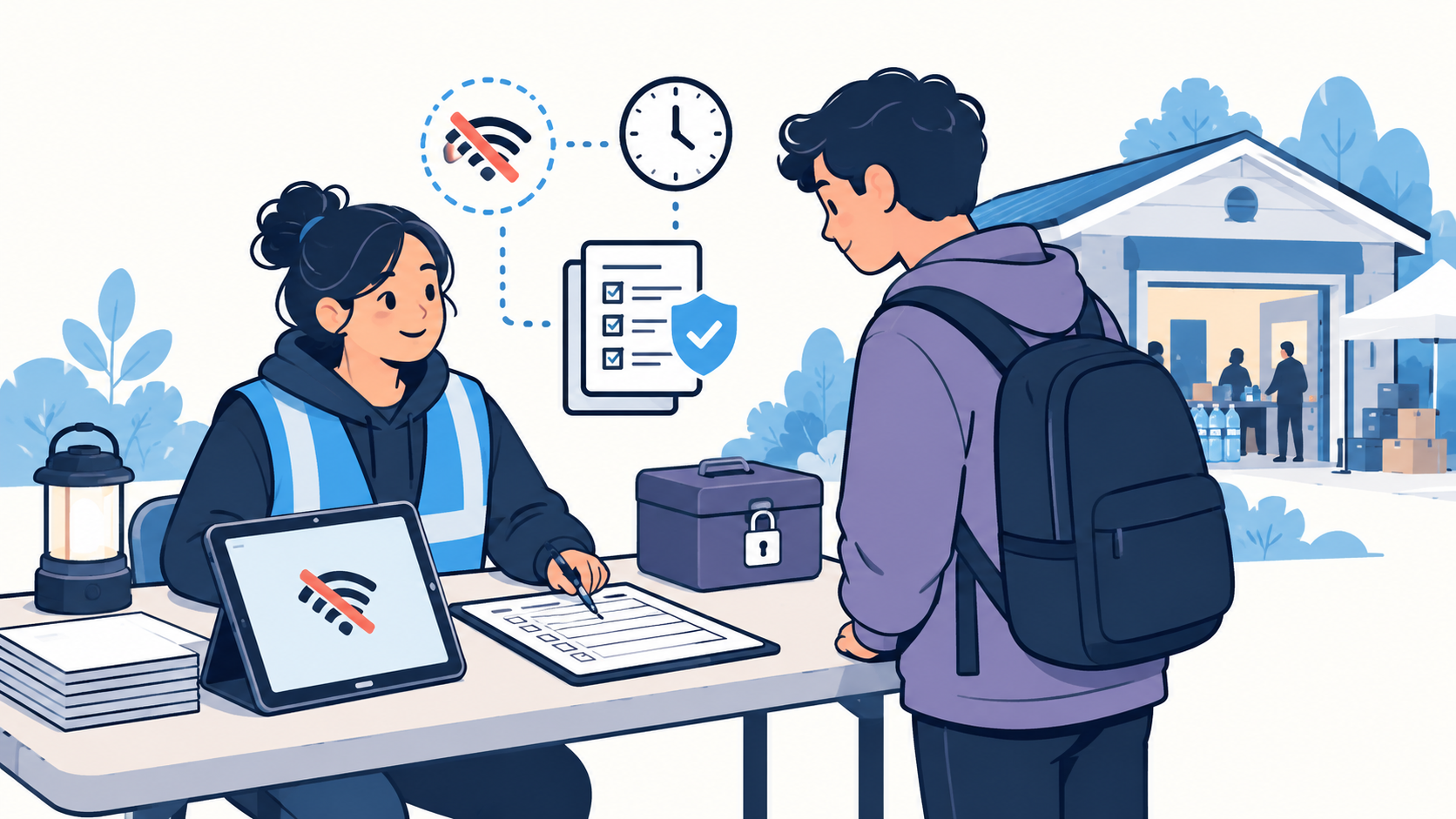
Help an emergency meeting point register volunteers when power and mobile networks are down. Explore how offline records can later reach a server completely and without duplicates.
Your task
Build a Python-based station app or paper-processing workflow that works in airplane mode. Record check-ins or read paper entries with human confirmation. Write events with timestamps into a hash-chained, signed log and transfer them when connectivity returns.
What you get
ORTSBEREIT provides a verification server, fictitious data, test cases, role cards and support. Suggested tools include Python, Flet, BeeWare or Pyodide, SQLite, OpenCV and cryptography. A non-coding team role designs the consent text, paper form and station workflow.
Expected result
Demonstrate your offline workflow and its transfer to the verification server. Show that records remain complete and tampering is detected. Test the station’s usability and explain where your solution can still fail.
Mesakumo: From tender to proposal
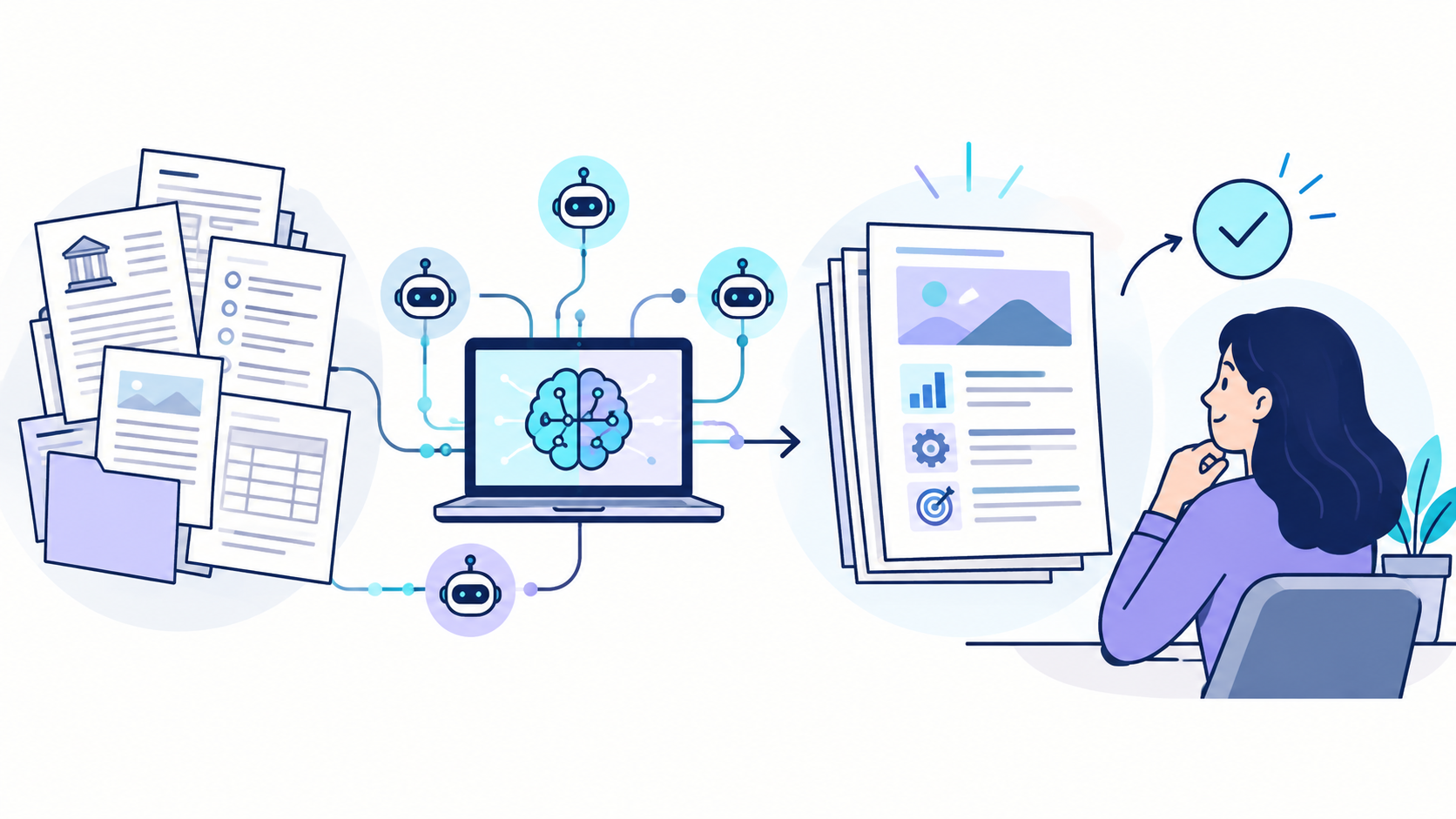
Help an Ulm-based digital, IT and AI consultancy prepare proposals for public tenders. Explore how AI agents can turn lengthy requirements into a document ready for human review.
Your task
Build a workflow that extracts tender requirements, matches relevant capabilities and reference projects, and writes proposal sections with source references. Identify missing information and include a review step where a person corrects and approves the output.
What you get
mesakumo provides selected tenders, a knowledge base, text modules, a corporate-design template and LLM access per team. Suggested tools include Python, Claude via Requesty EU, agent frameworks, Streamlit and document-processing libraries. Other frameworks are allowed.
Expected result
Present a proposal document in mesakumo’s corporate design and demonstrate the workflow. Show how it covers the tender requirements, supports claims with sources and helps a reviewer identify gaps before giving final approval.
NMR Quantum Engineering: From Spins to a Health Digital Twin
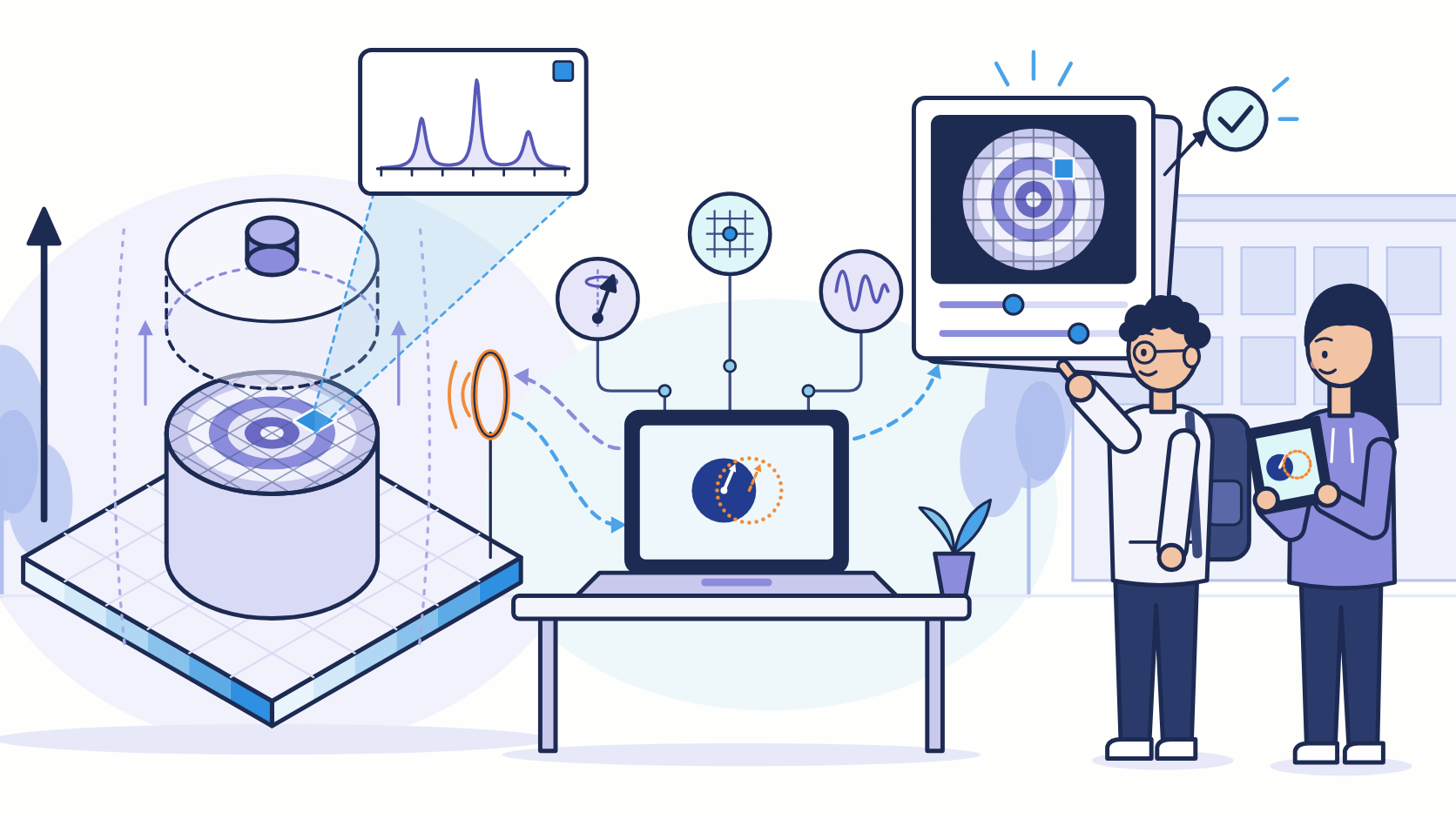
NMR Quantum Engineering (Ulm University, CTU Prague, TU/e): From Spins to a Health Digital Twin – for People, Devices and Objects
Friday’s lecture on MRI (magnetic resonance imaging) and localized spectroscopy (MRS) (20 Nov, 10:00–13:00) is the lead-in. At the 16:00 kick-off you turn that physics into a health digital twin of a person, a device or an object.
Your task
Build a prototype twin from a baseline and a follow-up MRI/MRS session of one system. Decide which changes are real and which come from the measurement, update the twin with honest uncertainty, and say what to measure next.
What you get
A starter pack of synthetic MRI and spectroscopy data, an interactive MRI Data Explorer and a challenge dossier with worked examples. Mentoring covers four tracks: quantum engineering, precision mechanics, data science and digital twins.
Expected result
Deliver a working prototype, a machine-readable evidence packet and a 5-minute pitch that defends one twin update: what changed, how certain it is and what to measure next. Use synthetic data only.
Schedule Overview
Friday, 20 November
- 16:00: Kick-off, company and challenge presentations; team formation and matching
- afterwards: Start working with company support
- 19:00: Dinner and continued challenge work
Saturday, 21 November
- morning: Breakfast
- 12:00: Lunch
- 13:30: Pitch review
- 15:00: Final pitches
- 16:00: Award ceremony
Celebrate the achievements of all participating teams and find out which teams take home a share of the €4,000 prize money! - 17:00: Event ends
Contact: