
Contact persons
For further information, please feel free to contact the following professors:


Whether you are studying Economics, Mathematics and Management, Chemistry and Management or Physics and Management - if you want to understand how companies are strategically managed and controlled on the basis of data, our "Corporate Management and Control" profile offers you exciting insights, for example into questions such as:
How do companies manage to operate profitably without neglecting environmental protection, for example? How do companies need to position themselves in order to be successful not only today, but also in ten or twenty years' time? How can employees be motivated? How can undesirable developments be recognised at an early stage?
We get to the bottom of these and many other questions as part of our profile. Corporate management refers to the strategic positioning of the company as well as the planning, implementation and control of the activities required to achieve the strategic goals.
Corporate management is supported by Management Accounting and Control ("Controlling") which in corporate practice acts primarily as a business partner to management. In Management Accounting and Control, data is analysed and condensed into information that shows whether the company is "on track". Controllers uncover weaknesses in the company, work out proposed solutions and develop incentive systems.
Our profile provides you with the specialist knowledge and analytical skills to prepare you as well as possible for future challenges in the field of corporate management and control.
Contact persons
For further information, please feel free to contact the following professors:
What goals should managers pursue? Nobel Prize winner Oliver Hart explains in this video which shareholder goals are relevant.
What other interests should managers take into account? In this video, Richard Freeman discusses the importance of stakeholder management for the success of a company.
Organisations such as the UN develop goals for sustainable development. We can all contribute to achieving these goals, but companies can do so in particular. This video presents important successes and goals of the UN initiative.
The Balanced Scorecard is a frequently used instrument in management accounting. Robert Kaplan, developer of the Balanced Scorecard, explains its importance for strategy communication in this video.
Transfer pricing is an important management control instrument for many companies. This short video highlights an important aspect of transfer pricing: its influence on companies' tax payments.
How can companies simultaneously refine their existing business and develop innovative ideas for new products? In this video, Gerhard Speckbacher looks at the tension between cost pressure and the need for innovation in management accounting and control (video in german).
We recommend that you choose at least two of the following three core modules (each with 6 CP):

What are the central tasks of management accounting and control? What goals should companies pursue and how can management accounting and control support the achievement of these goals? What instruments are available in normative, strategic and operational management accounting and control? For example, how should transfer prices be determined and what should be taken into account in the budgeting process? What role do standards and values play in corporate management?

What opportunities and risks do (German) companies face as a result of globalisation? What strategies can internationally operating companies pursue? What challenges do companies face in international production management and marketing? What instruments can controlling provide for the management of foreign subsidiaries?

How can ecological and social aspects of corporate management be taken into account? What social challenges do companies face and what risks and opportunities do they present? What is meant by corporate social responsibility? How should sustainable supplier management be organised? What are the key instruments of Sustainable Management?
Depending on your specialisation, you can take the following additional modules:
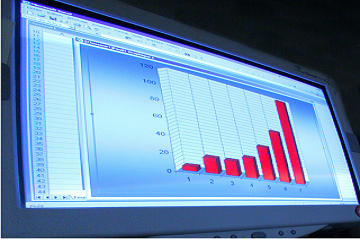
This lecture addresses the relationship between strategic considerations and corporate financing. The advantages and disadvantages of different forms of capital (bank loans, bonds, shares, etc.) for corporate financing are compared. Various exit strategies (when a company decides to separate a segment) are discussed.

What are the key statements of the principal-agent and stewardship theories? What is meant by the term corporate governance? What is the significance of the German Corporate Governance Code? What are the important components of corporate governance systems?

How are the nature and fundamentals of the annual financial statements defined? What content must be given special consideration in the most important balance sheet items, the income statement, the cash flow statement, the notes and management report as well as segment reporting? What differences must be taken into account in the aforementioned items according to national standards (HGB) and international standards (IFRS)?

What is rational behaviour when we interact with others? What role do expectations and information play? What quantities or prices do competing companies choose? When does a price war occur? When are price cartels stable?

What are the key methods of company valuation? What legal aspects need to be considered when valuing a company? What special features need to be taken into account when valuing a company?

Central concepts and methods of strategic, operational and analytical Customer Relationship Management (CRM) are discussed and illustrated using practical examples.
The Institute of Management Accounting and Control offers the seminars "Management Accounting and Control" (Prof. Wentges) and "Management and Controlling" (Prof. Trapp) every semester.
Of course, bachelor's theses can also be written at the Institute. Detailed information on this (subject areas, guidelines for writing scientific theses, sample topics) can be found here. If you are planning to write a bachelor's thesis at the Institute of Management Accounting and Control, we recommend that you attend a seminar at the Institute beforehand.
Graduates of the "Corporate Management and Control" programme distinguish themselves in professional life as:
The focus of the professional fields lies in private-sector companies ranging from medium-sized to large corporations.
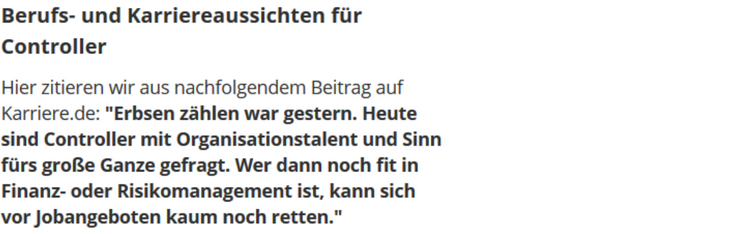
The International Controller Association (ICV) is the largest controller organisation in Europe. On its website, it discusses the currently very good appointment and career prospects for controllers:
How can remuneration systems help doctors to integrate cost considerations into their medical decisions? In an empirical study, Maik Lachmann, Rouven Trapp and Felix Wenger systematise performance measurement and remuneration systems in hospitals and show how these depend on the hospital's ownership structure.
Under what conditions do social steering and control mechanisms have their best effect? When can they be used simultaneously with other management tools? Alexander Ströbele and Paul Wentges show that the social capital of a company has a major influence on the effect and interaction of the respective control mechanisms and thus ultimately on the company's success.
How do team members react when there are biases in the performance evaluation, i.e. their service performances are rated disproportionately well or poorly compared to their colleagues? Irene Trapp and Rouven Trapp investigate this question as part of an experiment and analyse how biased performance evaluations affect motivation and perceived fairness and ultimately the commitment of the participants.
Does the ownership and management structure have an influence on the control and design of management control systems in companies? In an empirical study, Gerhard Speckbacher and Paul Wentges come to the conclusion that small and medium-sized family businesses are managed differently than non-family businesses and are characterised in particular by more informal management.