


Mass cytometry

Mass cytometry is a relatively new technique that allows the detection of more than 45 parameters on and in a single cell. Information can be extracted on receptors, cytokines, surface markers, transcription factors, apoptosis markers, phosphorylation steps and cell proliferation, to name but a few. The technology is based on a combination of mass spectrometry and flow cytometry. The instrument used for the measurements is known as CyTOF (Cytometry by Time Of Flight).
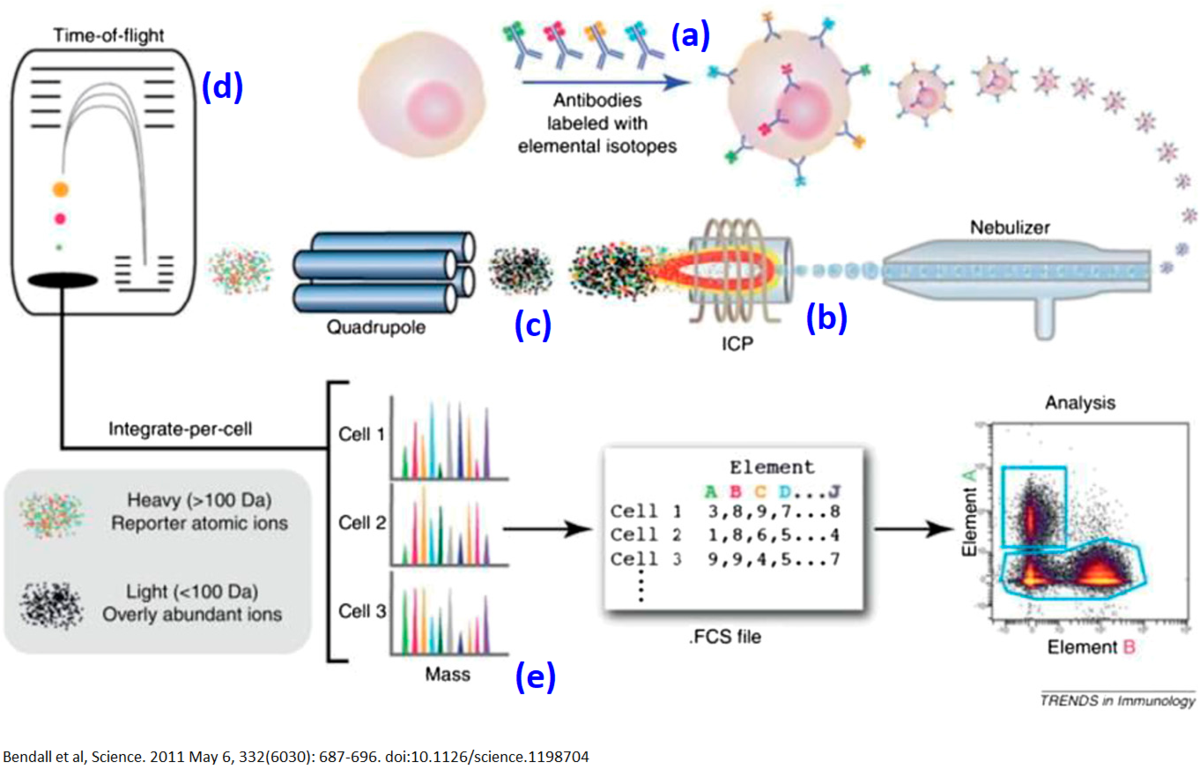
Epitope-specific antibodies coupled to metal isotopes are used to label the cell structures of interest (a). During the measurement process, the cell suspension is transformed into fine aerosol droplets as it enters the instrumentusing (b). These droplets are then vaporised by hot argon plasma and converted into small ion clouds (c). One ion cloud corresponds to one cell, labelled with different antibodies. Time-of-flight spectrocopy can be used to detect the different ion masses (d) and thus identify the individual profile of each cell (e). The data (in the form of fcs-files) can then be analyzed using any standard flow cytometry analysis software designed for multidimensional data analysis.
In contrast to other analysis methods, mass cytometry offers significant advantages:
A large amount of information about each individual cell can be extracted from minimal sample material.
In cell analysis, autofluorescence does not impact negatively on the analysis, as is often the case particularly with large cells.
Already prepared and labelled cells can be preserved at -80°C for a longer period of time. This allows the user a very high flexibility in sample preparation and the operator in scheduling the sample measurement.
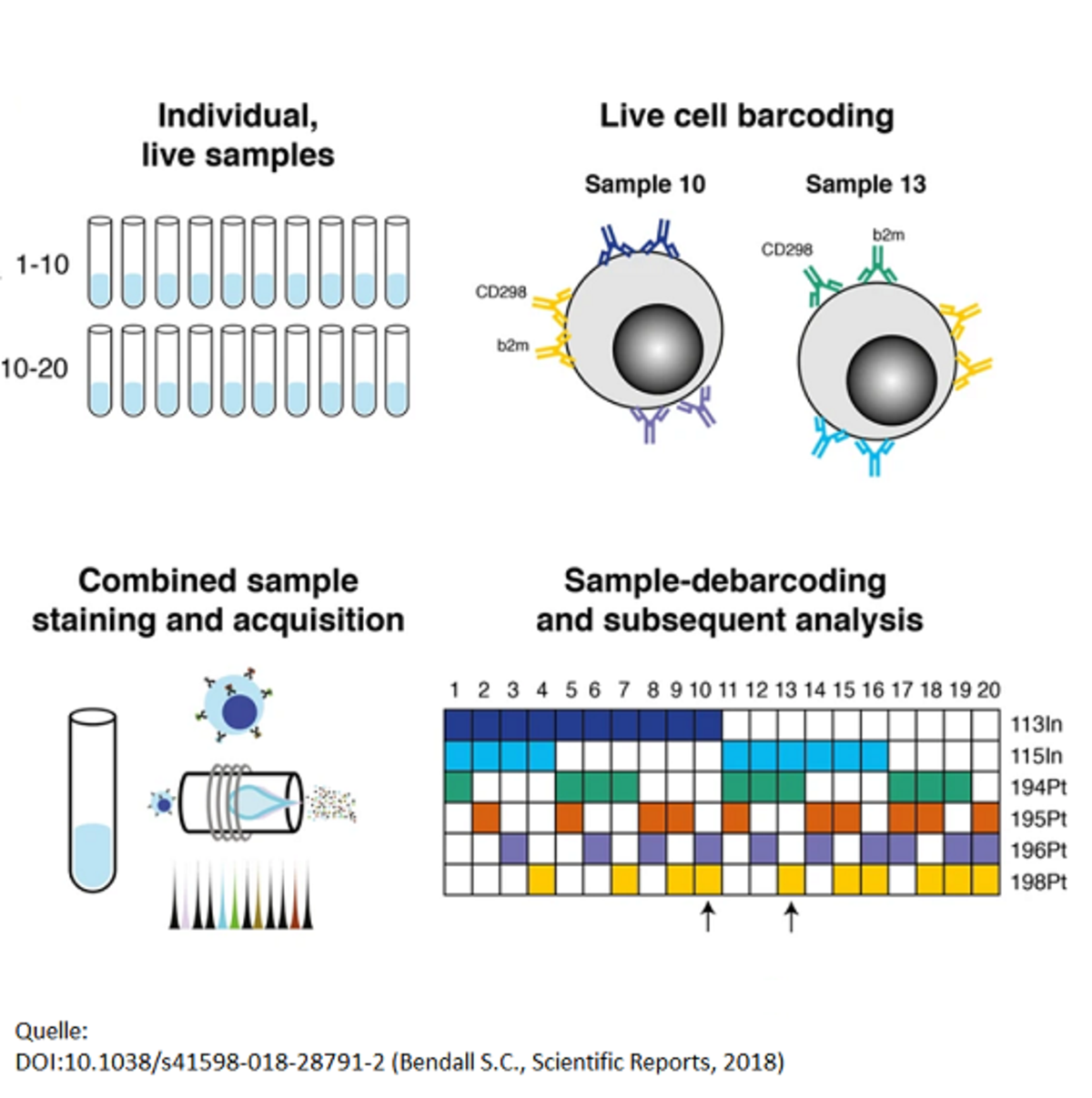
The use of "barcoding" enables the minimization of intra-assay variance within samples and is especially recommended for larger studies. in this process, each sample is individually labelled and then all pooled for further protocol progression, so that all subsequent preparative steps are performed under the same conditions. After the measurement, the different samples can be distinguished from each other, based on their individual barcoding and analyzed separately. Further information on barcoding is available on the Standard BioTools website.
Equipment
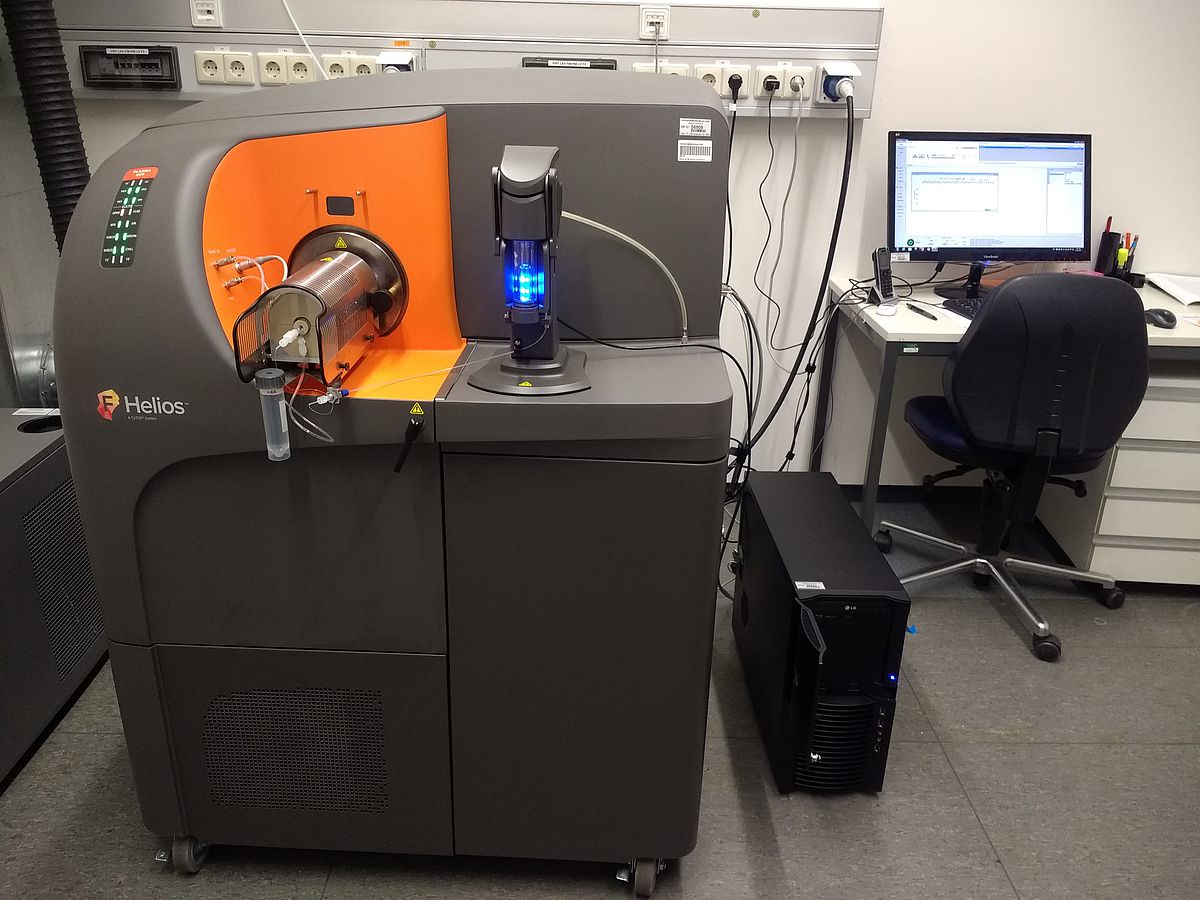
Helios a CyTOF system from Standard BioTools
Sample measurement: it is important that the Core Facility Cytometry staff has the current documentation sheet before each sample measurement.
Only one marker name should be provided for each channel used. The correct spelling of all markers must be observed, as this cannot be changed retrospectively.
The cell count of each individual measurement sample should be determined before protocol execution and again directly before the freezing process and also recorded on the documentation sheet.
More Information
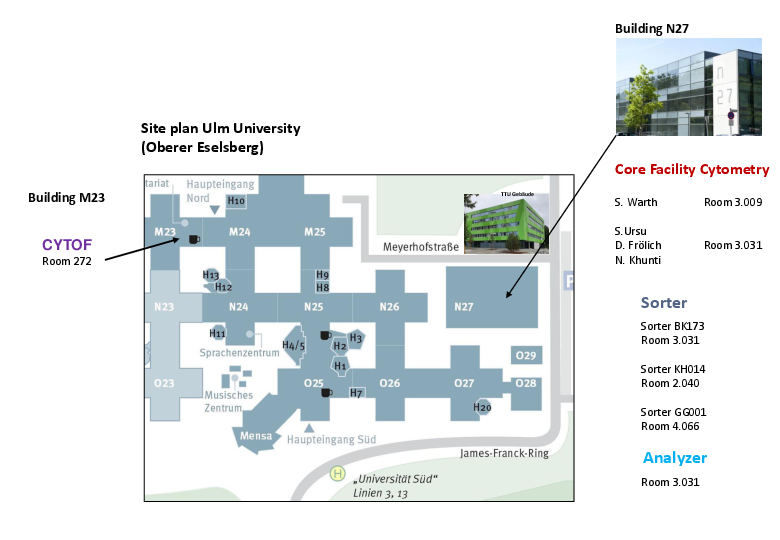
Our Core Facility equipment can be found at the following locations:
| BD FACSymphony™ A1 | N27, 3rd floor, R3.031 |
| Sorter FACSAria III KH014 | N27, 2nd floor, R2.040 |
| Sorter FACSAria III BK173 | N27, 3rd floor, R3.031 |
| Sorter FACSAria II GG001 | N27, 4th floor, R4.066 |
| Mass Cytometer: CyTOF (Helios) | M23, 2nd floor, R272 |