



Core Facility Manager
Dr. Christian Bökel
Tel: 0731 50 33700
The ULMTeC Core Facility Light Microscopy can be accessed by all scientists of the Medical Faculty and Ulm University and offers a wide spectrum of optical microscopy approaches. Our main technique, confocal microscopy, is based on the pixelwise scanning with illumination lasers to generate virtual 2D optical sections through 3D objects.
The core facility primarily provides training that allows users to later operate our microscopes independently. In addition, we offer support with the evaluation and interpretation of the image data, in particular concerning quantitative and statistical image analysis. Due to our long standing expertise we can also offer help with the design of imaging based experiments and the development of bespoke experimental protocols.

QuickLinks
Equipment
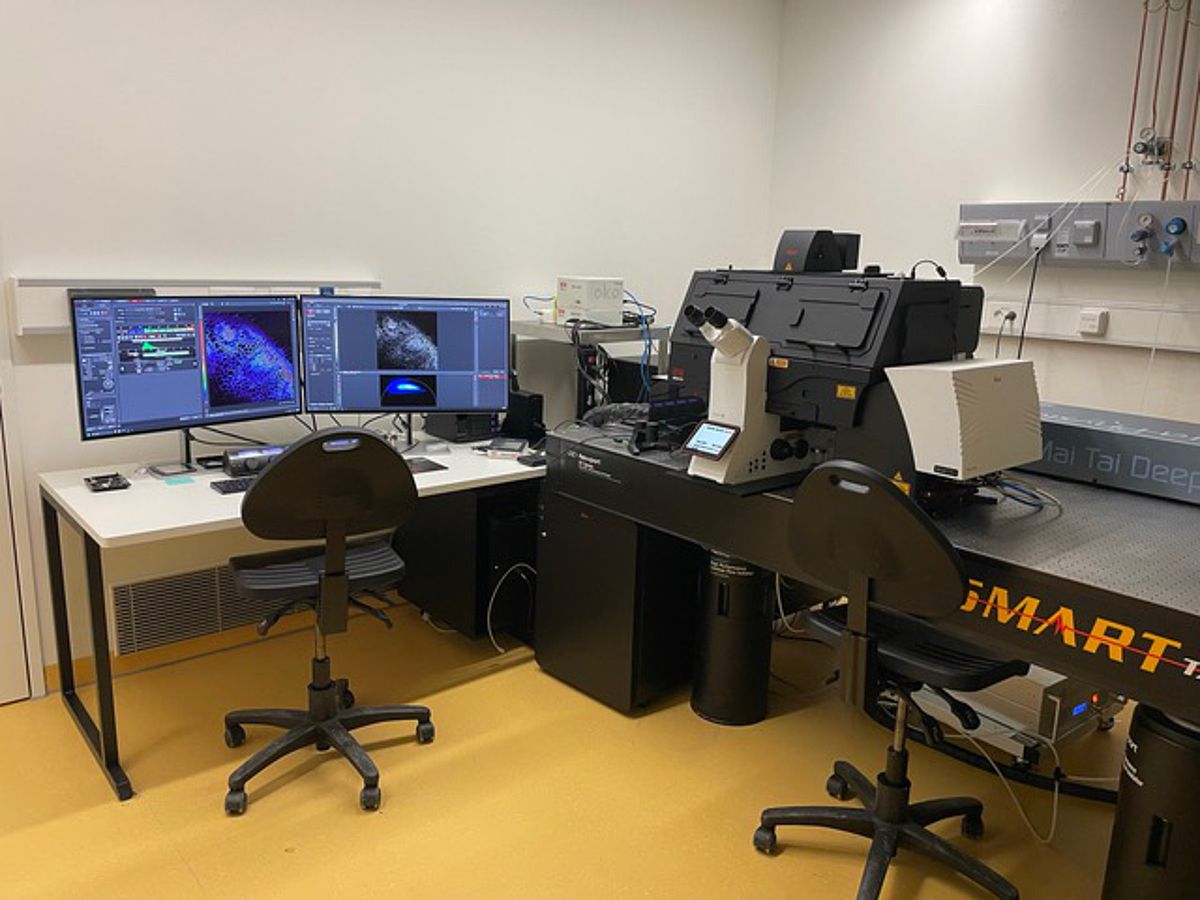
Leica STELLARIS FALCON DIVE
- Inverse confocal microscope
- Equipped with a CW 405nm laser for DAPI excitation, a pulsed white light laser for freely selectable excitation wavelengths between 450nm and 800nm, as well as a Spectra Physics MaiTAi 2-photon laser tunable from 690nm to 1040 nm
- Five highly sensitive detectors for confocal imaging
- Two spectral non-descanning detectors for multiphoton applications (2P imaging, second harmonic generation (SHG) microscopy, metabolic FLIM)
- Optimized for multiplex microscopy and time-resolved imaging techniques
- With incubator and climate control for live cell measurements
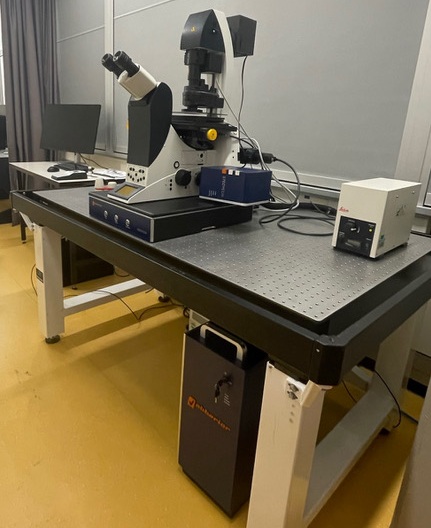
Abberior STEDYCON STED super-resolution microscope
- Inverse Stimulated Emission Depletion (STED) super-resolution microscope
- Super-resolution down to 30 nm (regular, diffraction limited light microscopy ca. 200 nm)
- Fixed and live cell imaging
- 4 spectral channels with single photon counting APD detectors
- Excitation lasers 405/488/561/640 nm
- 100x NA 1.4 STED objective
- STED super-resolution in orange and far red channels (green with certain limitations)
- Other spectral channels with confocal resolution
- Antibodies and live dyes with special, STED compatible chromophores available from the facility for testing!
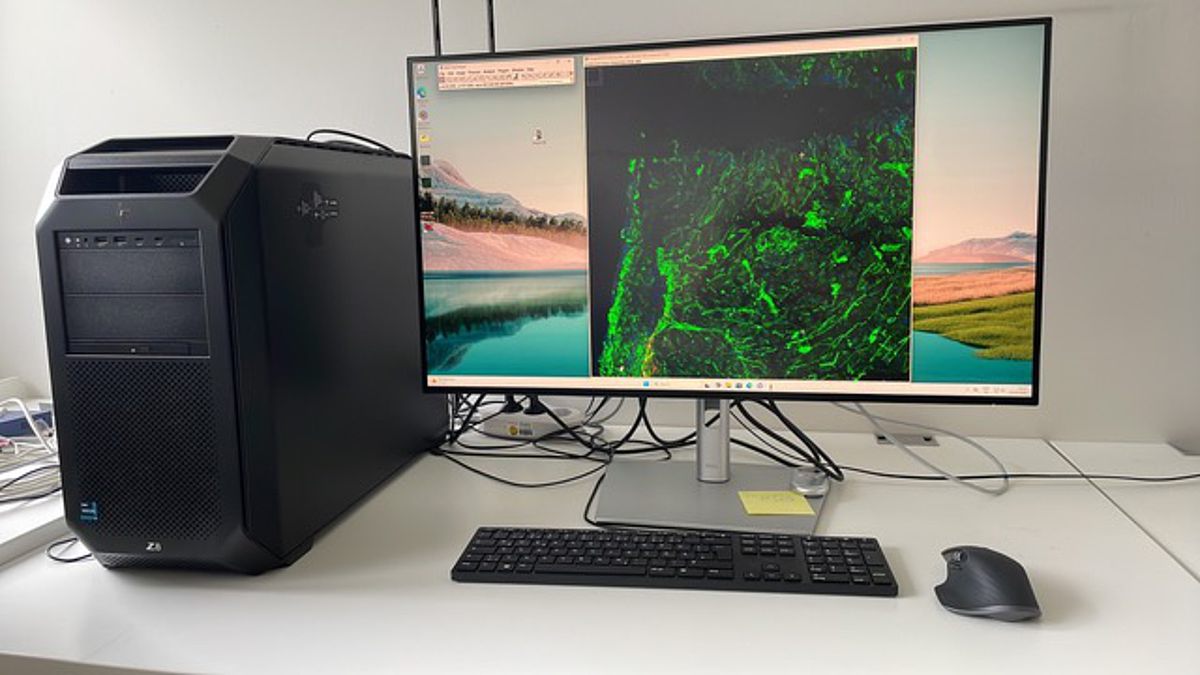
HP Fury Z8 Image processing workstation
- Workstation with 12 processor cores and 128 GB RAM
- Microscopy software bundles for quantitative, offline analyses
- Usable either in the Core Facility or remotely
- Hands-on support available for image statistics or coding of e.g. Image J macros and Python scripts
Services
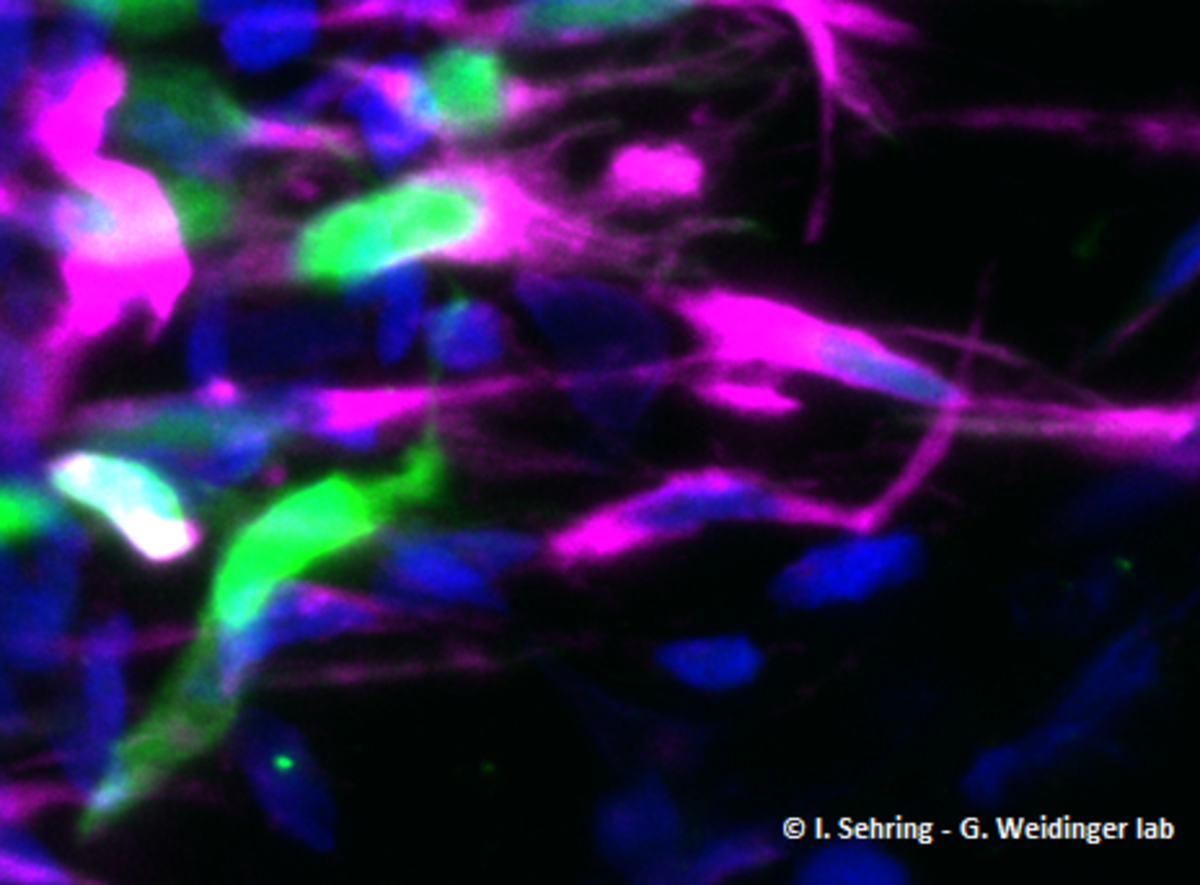
List of services
Facility services include:
- Standard and multiphoton confocal microscopy
- Live cell imaging
- Time resolved techniques such as FLIM, FLIM/FRET or FCCS
- Expertise in experiment design, staining protocols, subcellular imaging, …
- Support with quantitative image analysis and image statistics
- Hands on support for complex imaging tasks
Team
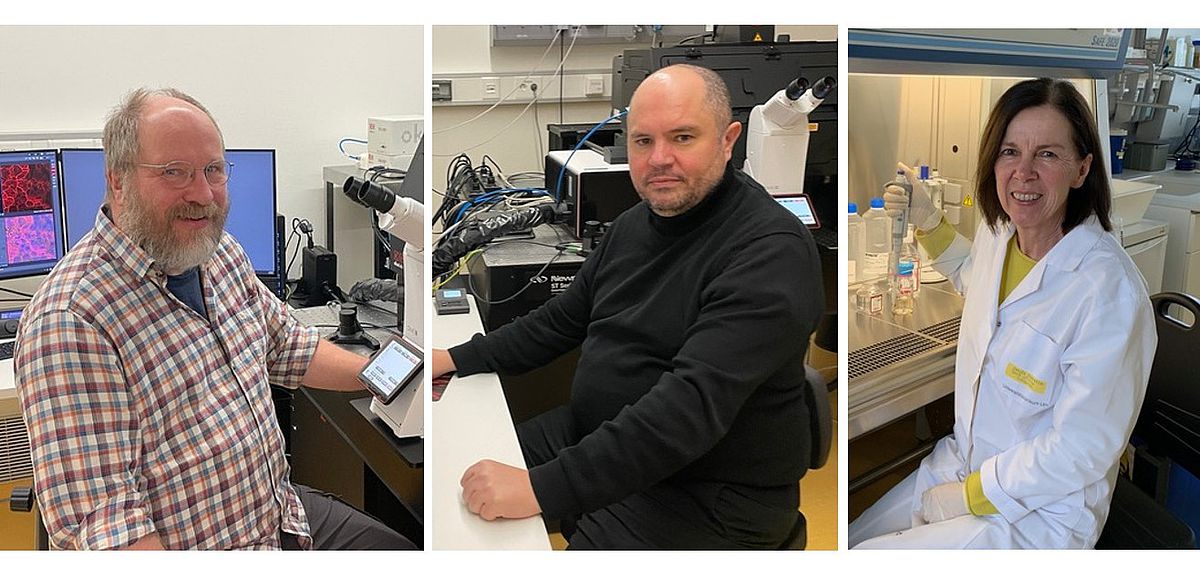
| Dr. Christian Bökel christian.boekel(at)uni-ulm.de | Dr. Christophe Trabi christophe.trabi(at)uni-ulm.de | Kirsten Reess kirsten.reess(at)uni-ulm.de |
|
|
|
Additional equipment in the CF Organoids: |