


EPILOC
The EPILOC (Epidemiology of Long COVID) study investigates which health complaints may persist months after a SARS-CoV-2 infection and how frequently they occur. Its aim is to improve the understanding of Long and Post-COVID and to provide a scientific basis for future research, potential therapeutic approaches, and improved patient care.
EPILOC is a multicentre study involving all university hospitals in Baden-Württemberg (Freiburg, Heidelberg, Tübingen, Ulm). It is conducted in collaboration with the local public health authorities and funded by the Ministry of Science, Research and the Arts Baden-Württemberg. The study combines population-based surveys with in-depth clinical assessments of selected participants. The collected data are integrated and analyzed across study sites.
The study focuses in particular on:
- the frequency and duration of Long- and Post-COVID symptoms and complaints
- determinants and potential influencing factors of disease progression
- associations between self-reported symptoms and clinical findings
- potential insights into pathophysiological mechanisms and therapeutic approaches
EPILOC at the Institute
Under the responsibility and leadership of Prof. Dr Dietrich Rothenbacher and Dr Raphael Peter, key data management tasks are coordinated and implemented at the Institute. A particular focus lies on the centralised processing of population-based questionnaire data, which was carried out across study sites in Ulm.
In addition, the data management centre is responsible for the following tasks:
- the development and implementation of data quality assurance processes
- the structuring and documentation of datasets
- the integration and harmonisation of data from different study centres
- the preparation of analysis-ready datasets for scientific evaluation
- methodological support for cross-site analyses
In this way, the Institute of Epidemiology and Medical Biometry at Ulm University makes a significant contribution to ensuring that the data collected within the EPILOC consortium are consistent, quality-assured, transparent, and suitable for scientific analysis.
The EPILOC Data Management Centre is led by an experienced team:
- Dr Raphael S. Peter
- Prof. Dietrich Rothenbacher
- Dr Stefanie Braig
- Lisamaria Sedelmaier
- Jennifer Müller
Key Actors in the EPILOC Consortium
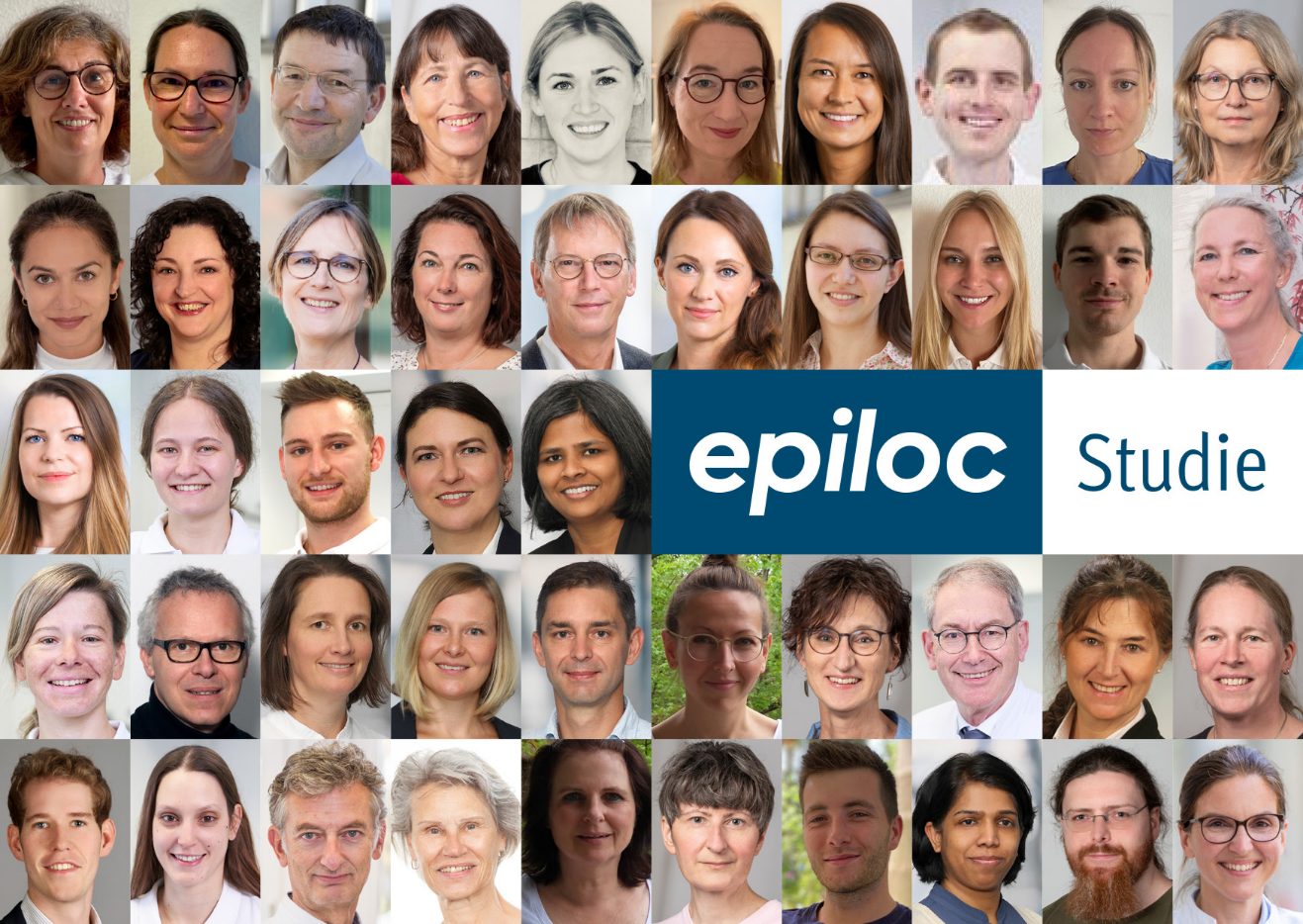
The EPILOC study is conducted by an interdisciplinary consortium of clinical, epidemiological and methodological experts. The following individuals and institutions play key roles within the consortium:
EPILOC Principal Investigators
- Prof. Dr Winfried V. Kern (Freiburg)
- Prof. Dr Hans-Georg Kräusslich (Heidelberg)
Epidemiology & Data Management / Biobanking
- Prof. Dr Alexandra Nieters (Freiburg)
- Prof. Dr Dietrich Rothenbacher, MPH (Ulm)
- Dr Raphael S. Peter (Ulm)
Participating Clinical Departments of the University Hospitals
Freiburg
- Prof. Dr Winfried V. Kern
- Prof. Dr Peter Deibert
Heidelberg
- Prof. Dr Uta Merle
- Prof. Dr Birgit Friedmann-Bette
Tübingen
- Dr Siri Göpel
- Prof. Dr Andreas Nieß
Ulm
- Dr Johannes Kirsten
- Prof. Dr. Dr. h.c. Jürgen M. Steinacker
Central Virology Laboratory (Heidelberg)
- Prof. Dr Hans-Georg Kräusslich
- Prof. Dr Barbara Müller
- Dr Sylvia Parthé
Neuropsychiatric Expertise
- Dr Claudia Schilling (ZI Mannheim)
Participating Public Health Authorities
- Stuttgart Regional Health Authority
- Freiburg / Breisgau-Hochschwarzwald & Emmendingen
- Heidelberg / Rhine-Neckar District
- Tübingen, Reutlingen & Zollernalb District
- Ulm / Alb-Donau District, Biberach & Heidenheim
The EPILOC consortium has established a Data Access and Use Committee (DAUC), which evaluates and coordinates requests for the use of study data. Such requests can be directed to dauc.epiloc(at)uni-ulm.de.
Publications (as of April 2026)
- Peter RS, Nieters A, Kräusslich HG, Brockmann SO, Göpel S, Kindle G, Merle U, Steinacker JM, Rothenbacher D, Kern WV; EPILOC Phase 1 Study Group. Post-acute sequelae of COVID-19 six to 12 months after infection: population-based study. BMJ. 13 October 2022;379:e071050. doi: 10.1136/bmj-2022-071050
- Peter RS, Nieters A, Brockmann SO, Göpel S, Kindle G, Merle U, Steinacker JM, Kern WV, Rothenbacher D; EPILOC Phase 1 Study Group. Association of BMI with general health, recovered working capacity, and post-acute sequelae of COVID-19. Obesity (Silver Spring). January 2023;31(1):43-48. doi: 10.1002/oby.23611
- Braig S, Peter RS, Nieters A, Kräusslich HG, Brockmann SO, Göpel S, Kindle G, Merle U, Steinacker JM, Kern WV, Rothenbacher D. Post-COVID syndrome and work ability 9–12 months after a SARS-CoV-2 infection among over 9,000 employees from the general population. IJID Reg. 24 November 2023;10:67–74. doi: 10.1016/j.ijregi.2023.11.015
- Schilling C, Nieters A, Schredl M, Peter RS, Rothenbacher D, Brockmann SO, Göpel S, Kindle G, Merle U, Steinacker JM, Kern W. Pre-existing sleep problems as a predictor of post-acute sequelae of COVID-19. J Sleep Res. 2024 Apr;33(2):e13949. doi: 10.1111/jsr.13949
- Peter RS, Nieters A, Göpel S, Merle U, Steinacker JM, Deibert P, Friedmann-Bette B, Niess A, Müller B, Schilling C, Erz G, Giesen R, Götz V, Keller K, Maier P, Matits L, Parthé S, Rehm M, Schellenberg J, Schempf U, Zhu M, Kräusslich H-G, Rothenbacher D, Kern VW. Persistent symptoms and clinical findings in adults with post-acute sequelae of COVID-19/post-COVID-19 syndrome in the second year after acute infection: a population-based, nested case-control study. PLOS Medicine. 23 January 2025. doi: 10.1371/journal.pmed.1004511
- Peter RS, Sedelmaier L, Nieters A, Brockmann SO, Göpel S, Merle U, Steinacker JM, Kräusslich HG, Rothenbacher D, Kern WV; EPILOC Phase 3a Study Group. Symptom burden and post-COVID-19 syndrome 24 months following SARS-CoV-2 infection: Longitudinal population-based study. J Infect. June 2025;90(6):106500. doi: 10.1016/j.jinf.2025.106500
- Schellenberg J, Matits L, Bizjak DA, Deibert P, Friedmann-Bette B, Göpel S, Merle U, Niess A, Frey N, Morath O, Erz G, Peter RS, Nieters A, Rothenbacher D, Kern WV, Steinacker JM. Cardiac structure and function 1.5 years after COVID-19: results from the EPILOC study. Infection. 2025 Oct;53(5):1685-1697. doi: 10.1007/s15010-025-02481-4
- Braig S, Peter RS, Nieters A, Kräusslich H-G, Brockmann SO, Göpel S, Merle U, Steinacker JM, Kern WV, Rothenbacher D; EPILOC Phase 3a Study Group. Post-COVID-19 symptoms, subjective work ability and sick leave 2 years after acute infection—results from a population-based long COVID study. BMC Public Health 2025. doi: 10.1186/s12889-025-26066-w
- Matits L, Schellenberg J, Mack M, Kolassa IT, Schilling C, Rothenbacher D, Peter RS, Kern WV, Nieters A, Steinacker JM, Bizjak DA; EPILOC Phase 2 Study Group. Circulating mitochondrial and cellular damage markers in long COVID: Links to cognitive function, psychological distress, and inflammation. Mol Psychiatry. 7 February 2026. doi: 10.1038/s41380-026-03471-0