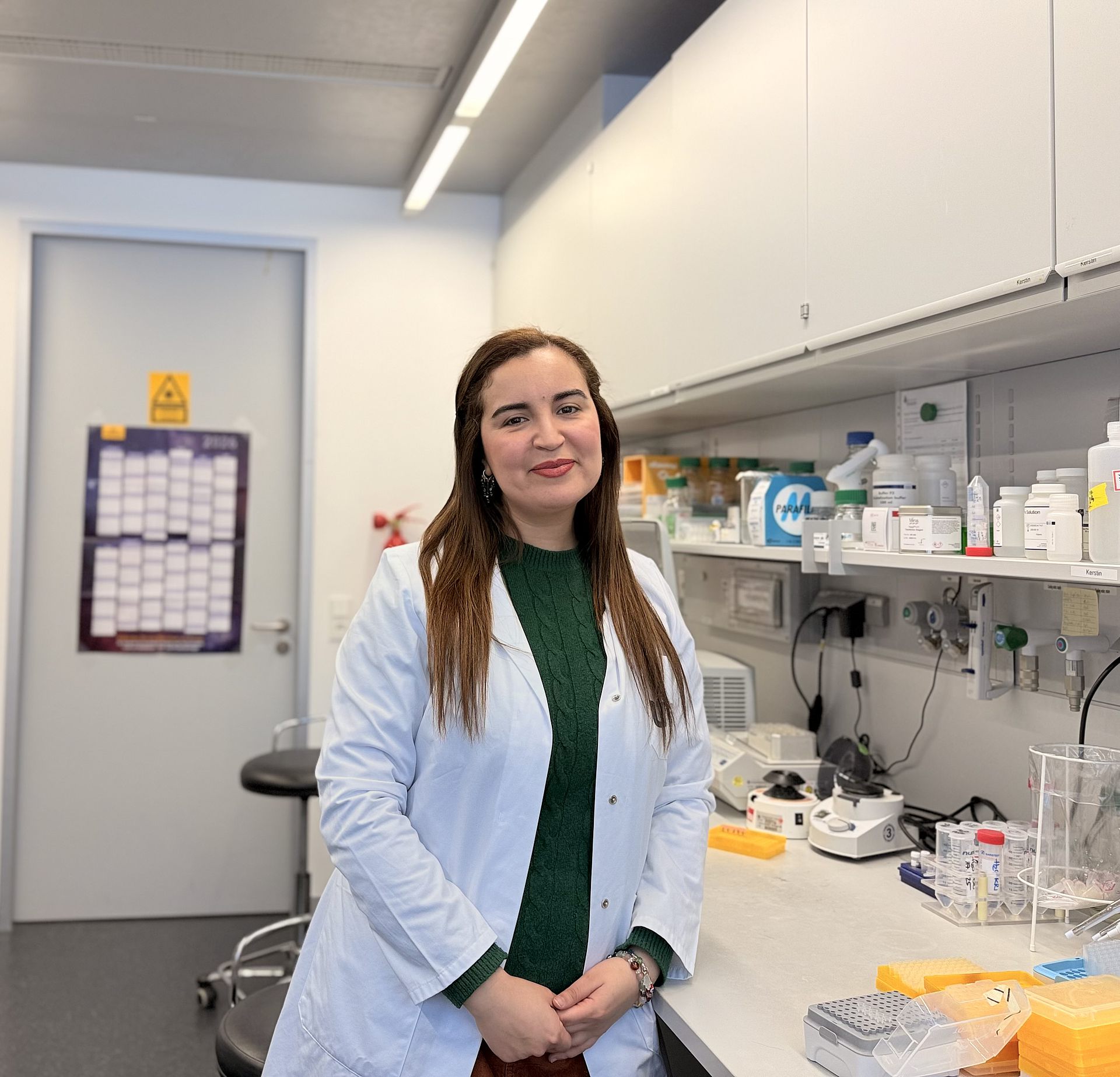


Dr. Rayhane Nchioua
My research investigates how pandemic and emerging viruses interact with the innate immune system, and how these interactions shape viral evolution, cross-species transmission, and pathogenicity. I focus on antiviral restriction factors and innate immune sensors that detect viral infection, as well as the counterstrategies viruses evolve to escape or even exploit these defenses.
I have shown that the interferon-induced zinc finger antiviral protein (ZAP) restricts RNA viruses by targeting CpG-rich viral genomes, and that successful zoonotic pathogens such as SARS-CoV-2 and HIV-1 exhibit CpG suppression as a preadaptation to evade ZAP detection. At the same time, endogenous ZAP remains a potent antiviral effector under interferon-stimulated conditions. My work has also uncovered a paradoxical role for IFITM proteins: while typically antiviral, IFITM2 can be hijacked by SARS-CoV-2 to promote viral entry and replication.
In parallel, I study inflammasome activation through CARD8, an innate immune sensor that detects viral protease activity. Primate lentiviruses display species-specific differences in CARD8 cleavage and activation, highlighting evolutionary pressure to evade immune detection. Some viruses further downregulate CARD8 expression, adding an additional layer of immune modulation. Together, this work reveals how viruses activate, evade, or exploit host defenses through convergent evolutionary strategies—mechanisms that ultimately determine their capacity to spread in human populations and establish persistent infection.