


Inflammation is a natural reaction of the body to invading pathogens. Depending on the type of inflammatory reaction and the underlying pathology, it can be either acute (e.g. septicaemia, pneumonia) or chronic. During inflammation, the cells are also exposed to constant mechanical stress, which can also influence their inflammatory state. The healing of inflammation and the restoration of tissue homeostasis are crucial processes for the recovery of a healthy body. My research group is investigating novel hormone-driven mechanisms involved in inflammation and developing therapeutic strategies. Our goal is to identify and target novel regulators of anti-inflammatory and pro-inflammatory signalling pathways to accelerate the healing of inflammatory responses.
Research interests:
- Hormonal control and regulation of inflammatory processes
- Regulators of inflammation and their resolution
- Mechanostimulation of immune cells
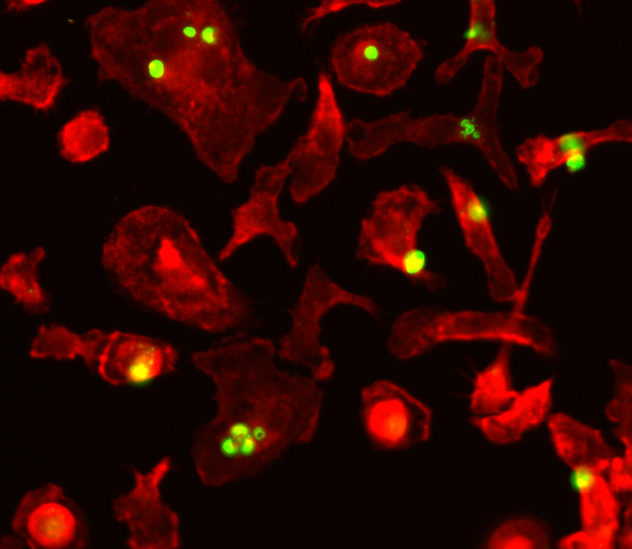
Projects
1. reversibility of long-term glucocorticoid effects
We are investigating the long-term effects of glucocorticoid therapy in murine tissue. The aim of this project is to investigate the glucocorticoid effects in non-immune and immune cells at the single cell level in order to understand the mechanisms of the side effects of glucocorticoid therapy. This project is funded by the DFG and is a collaboration with Dr Franziska Greulich at the TUM School of Life Science.
2. peripheral nerve injuries: Interaction between Schwann cells and macrophages
5 % of all trauma patients are affected by peripheral nerve injuries. Schwann cells are the main drivers of peripheral nerve regeneration after injury by switching from a differentiated to a regenerative repair state. In addition, efficient macrophage phagocytosis is important to remove tissue debris from the injury site and a crucial step in the degeneration phase to ensure a successful subsequent regeneration phase. In this DFG-funded project within the CRC 1149, we are investigating the interaction between Schwann cells and macrophages and will identify key factors that enhance the regeneration potential after peripheral nerve injury.
3. combined effects of adrenal hormones
Adrenal hormones contribute significantly to inflammatory processes by promoting inflammatory healing through their effect on immune cells. This DFG-funded project aims to understand the underlying mechanisms of glucocorticoids and catecholamines in different models of inflammation and their translation to humans.
4. mechanostimulation
During inflammation, (immune) cells are constantly exposed to mechanical stimulation. We investigate the influence of mechanostimulation and the role of nuclear receptors during (healing of) inflammation.
5. arthritis (in cooperation with Prof Dr Tuckermann)
Glucocorticoids are used to treat rheumatoid arthritis due to their reinforced anti-inflammatory effect. However, their long-term use is impaired by side effects (glucocorticoid resistance, insulin resistance, osteoporosis). In this project, we are investigating the role of anti-inflammatory glucocorticoids in immune and non-immune cells in arthritis.

Selected Publications
Tau(t)ing glucocorticoid binding
Vettorazzi S., Tuckermann J. (2025) Tau(t)ing glucocorticoid binding. Cell Res. Jan;35(1):1-2
Journey through discovery of 75 years of glucocorticoids: evolution of our knowledge of glucocorticoid receptor mechanisms in rheumatic diseases.
Eiers AK, Vettorazzi S, Tuckermann JP. (2024) Journey through discovery of 75 years of glucocorticoids: evolution of our knowledge of glucocorticoid receptor mechanisms in rheumatic diseases. Ann Rheum Dis. Aug 6:ard-2023-225371
Cigarette smoke exposure reduces hemorrhagic shock induced circulatory dysfunction in mice with attenuated glucocorticoid receptor function.
Wepler, M., Preuss, J.M., Tilp, C., Keck, M., Blender, J., Wachter, U., Merz, T., Vogt, J., Kress, S., Groeger, M., Hoffmann, A., Fink, M., Calzia, E., Burret, U., Radermacher, P., Tuckermann, J., Vettorazzi, S. (2022) Cigarette smoke exposure reduces hemorrhagic shock induced circulatory dysfunction in mice with attenuated glucocorticoid receptor function. Front. Immunol. 13:980707
Deletion of Cdk5 in Macrophages Ameliorates Anti-Inflammatory Response during Endotoxemia through Induction of C-Maf and Il- 10.
Pfänder, P., Eiers, A.-K., Burret, U., Vettorazzi, S. (2021) Deletion of Cdk5 in Macrophages Ameliorates Anti-Inflammatory Response during Endotoxemia through Induction of C-Maf and Il- 10th Int. J. Mol. Sci. Artic.
Glucocorticoids limit acute lung inflammation in concert with inflammatory stimuli by induction of SphK1.
Vettorazzi, S., Bode, C., Dejager, L., Frappart, L., Shelest, E., Klaen, C., Tasdogan, A., Reichardt, H. M., Libert, C., Schneider, M., Weih, F., Uhlenhaut, N. H. H., David, J.-P., Gräler, M., Kleiman, A., Tuckermann, J. P. (2015) Glucocorticoids limit acute lung inflammation in concert with inflammatory stimuli by induction of SphK1. Nat. Commun. 6, 1-12


