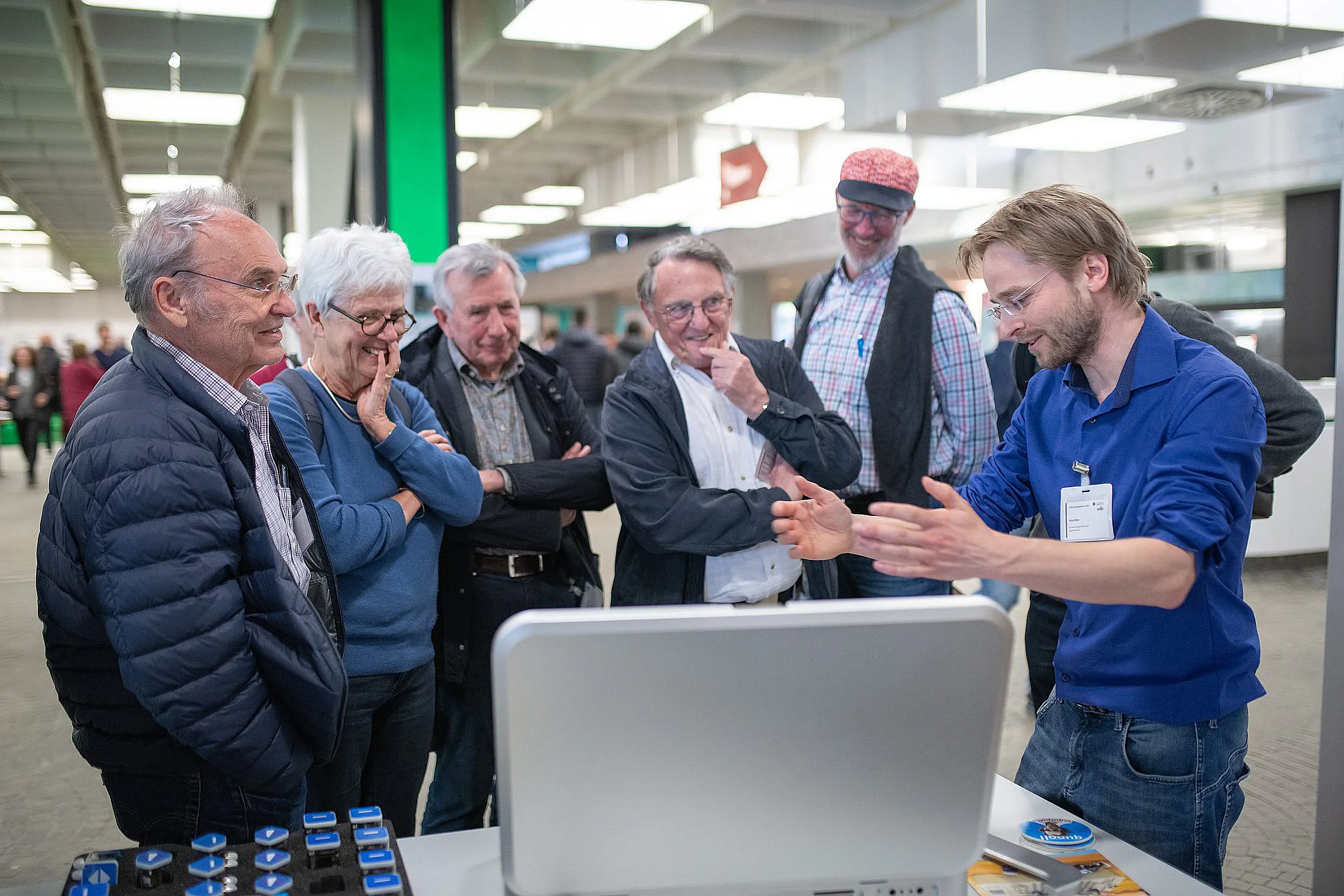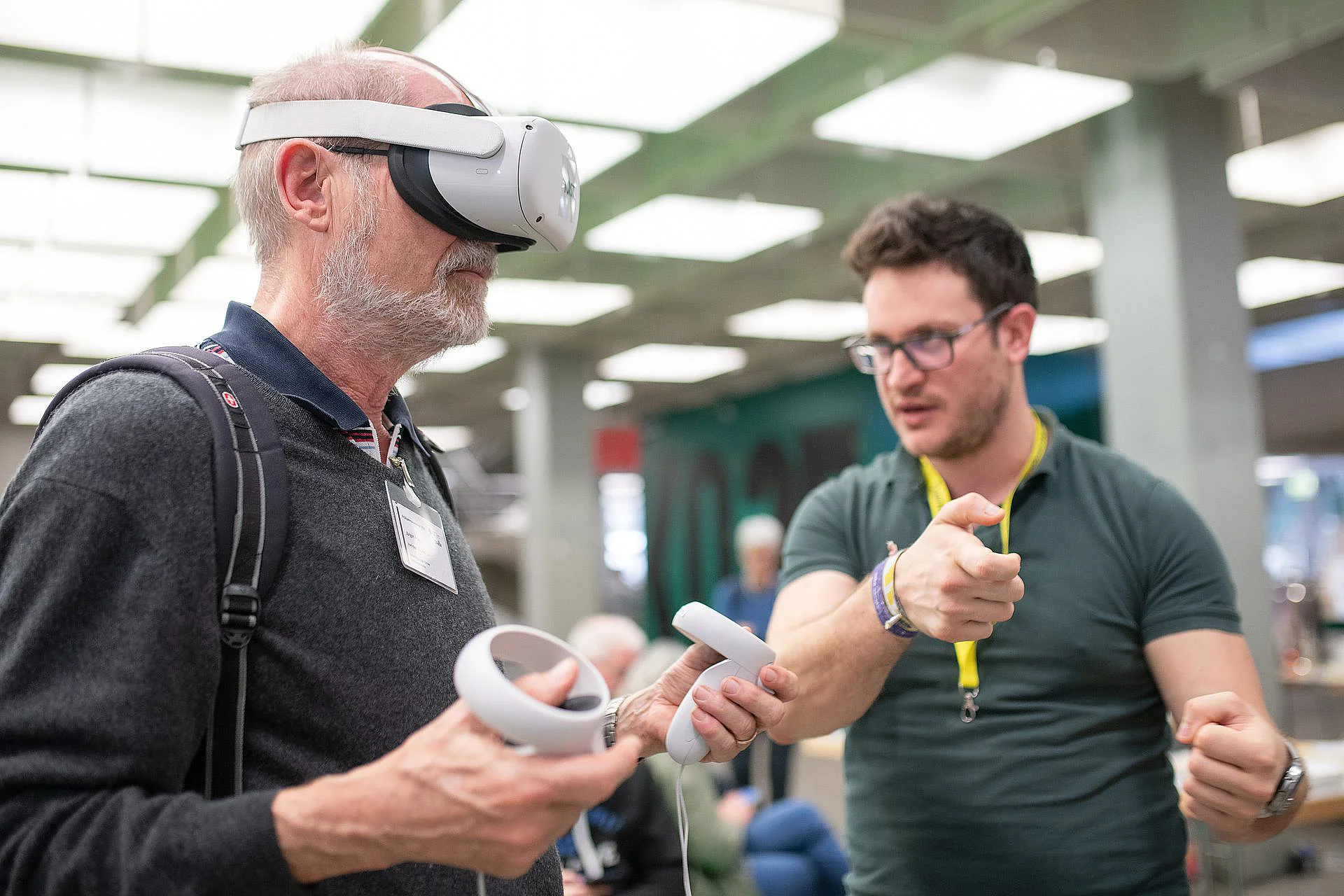

The encounters in the lecture hall and the exchange between researchers and citizens at eye level are a wonderful opportunity for personal development.(Participant of the academy weeks, 82 years old)

Spring Academy from 23 - 26 March 2026

Living together. Connecting instead of dividing.

Registration from 1 to 28 February 2026 via the Academy website.

Programme Online registration
The registration form for written registrations will be available from 1 February 2026.

If you would like to receive information on the detailed programme and registration in good time, please subscribe to our newsletter.

Das Titelbild der Frühjahrsakademie 2026: Gesichter aus farbigen Flächen in Mosaikform zusammengesetzt
Titelbild der Frühjahrsakademie 2026 "ZusammenLeben. Verbinden statt spalten"

Foreword to the Spring Academy 2026

Social cohesion is not a sure-fire success. In times of crisis, polarisation, growing inequality and profound change, living together is under pressure. The theme of the Spring Academy 2026 is "Living together. Connecting instead of dividing" and asks what holds our society together and how this togetherness can be reinforced.

Gilda Sahebi will kick things off with a critical look at the narrative of a divided society. She shows how polarisation is promoted politically and by the media and which unifying forces are already at work in everyday life. Beate Küpper analyses the state of democratic attitudes in Germany on the basis of the current Mitte study - between concerns about right-wing extremism and a stable democratic attitude among the majority.
NilsGoldschmidt focuses on justice as an ethical and economic compass for social cohesion and sustainable prosperity. Anna Cornelia Reinhardt addresses the issue of living together in an ageing migration society and asks for solidarity-based answers under conditions of social inequality. Stefanie Bremer concludes with a personal and political plea in favour of tax and wealth justice as the key to fair participation and sustainability.

Together, the five lectures open up a multi-faceted dialogue on democracy, justice, diversity and responsibility - and invite us to rediscover and actively shape what unites us.

In keeping with the title of the academy week, the accompanying cultural event invites participants to sing together. The focus is on joy and community experience, not on reading music correctly.
The working groups and Wednesday programmes once again offer a wide range of topics - from artificial intelligence and IT security to economic and biological issues and creative activities such as writing and painting.

We look forward to your participation and personal encounters.

Academy weeks

Imparting knowledge, facilitating encounters, exchange and discussion

  • A socially relevant topic from different research perspectives
  • A varied programme of lectures, working groups and guided tours for interested members of the public
  • A further education programme in a compact format - flexible, individual and open to all
  • Successful for over 30 years with 400 to 500 participants on a regular basis

Twice a year, the Centre for General Continuing Scientific Education (ZAWiW) at Ulm University organises the so-called Academy Weeks, the Spring Academy at the end of March and the Autumn Academy at the end of September.
As continuing education courses in a compact format, the Academy Weeks meet the wishes of people in the "third age" in particular with their thematic focus and time structure. However, everyone is welcome who would like to engage with key social issues and familiarise themselves with the current status of scientific discussions from various research perspectives. The academy weeks are subject to registration and fees.

Review of the Autumn Academy 2025

Secure in the digital world: how threatened are sovereignty and privacy?

The autumn academy was dedicated to the topic of "Security in the digital world". Against the backdrop of the ongoing digitalisation of all areas of life, security, data protection and the protection of privacy are increasingly coming into focus. Insecure software, identity theft, data leaks and targeted cyber attacks are already part of our everyday lives. Companies are exposed to professionally organised attacks, private individuals have to be increasingly aware of how they handle their personal data and public IT infrastructures are increasingly coming under pressure or becoming dependent on proprietary solutions. From different research and scientific perspectives, we are asking how sovereignty and privacy can be protected in the face of these threats.

The programme.