


Seminar Digital Business & Analytics (Master)
In the seminar, students deal with topics from the field of "Digital Business & Analytics". Based on the literature and data sets provided, they will answer questions of practical relevance and not only analyse, classify and replicate literature or data, but also critically question them or expand them with their own innovative ideas. They have the freedom to work in a literature-based, data-based, application-orientated or experimental way.
The following notes should be observed:
- Practically relevant questions, data sets and basic literature are provided; however, students can contribute their own ideas and questions.
- The assessment consists of a presentation (1/3) and a written seminar paper (2/3).
- Length of the seminar paper: 15 pages (for application-orientated work) and 20 pages (for literature-based work).
- No programming knowledge is required for the seminar.
Subject areas
Brief description: Digital nudging uses targeted design elements in digital environments to subtly steer user decisions in desired directions. In the context of sustainable behaviour in particular, this can promote environmentally friendly or resource-saving decisions. Effective nudges are based on psychological mechanisms and show that small interventions in digital design can have a big impact on sustainable behaviour. (Contact: Leonie Embacher, Jana Ruß, Christopher Tille)
Literature:
- Habla, M., Pitz, K., Tille, C., & Zimmermann, S. (2025). Think Global, Nudge Local–The Influence of Cultural Background on Digital Nudging for Sustainable Decision-Making. European Conference on Information Systems (ECIS) 2025.
- Habla, M.; Rupp, N.; Wrabel, A.; Seiter, M.; Zimmermann, S. (2024): Effects of Digital Nudging in Multi-Stage Decisions - Experimental Evidence on Pro-Environmental Employee Behavior (2024). International Conference on Information Systems (ICIS) 2024.
Data sets: The data from the aforementioned literature can be provided as a data set.
Possible questions:
- Spillover effects: Does digital nudging lead to lasting behavioural changes in other areas of life (e.g. different contexts or at different times)?
- One size fits all? How effective are personalised digital nudges compared to standardised digital nudges?
- Global digital nudging strategies: How can global companies and platforms use digital nudges without ignoring social differences?
- …
Brief description: Smart energy encompasses technologically advanced approaches to optimising energy generation, distribution and use. Against the backdrop of growing awareness of energy efficiency and environmental protection, the integration of intelligent technologies such as the Internet of Things (IoT) and artificial intelligence (AI) is playing an increasingly important role. For example, the sharp fluctuations in renewable energy generation require innovative solutions for storage and demand management to ensure a continuous supply. At the same time, the development of smart homes offers opportunities to optimise energy consumption and adapt to supply-side dynamics. (Contact: Jonathan Ibele)
Literature:
- Völker, B., Reinhardt, A., Faustine, A., & Pereira, L. (2021). Watt’s up at Home? Smart Meter Data Analytics from a Consumer-Centric Perspective. Energies, 14 (3), 719.
Data sets: Data sets are provided for processing the seminar paper. (https://www.kaggle.com/datasets/mexwell/smart-home-energy-consumption/data)
Possible questions:
- How can smart energy data be used to make predictions about future household electricity consumption?
- How can AI help provide recommendations for optimising the use of household appliances?
- How do smart meter apps support behavioural change among consumers towards energy-efficient behaviour?
- ...
Brief description: Human-AI Collaboration investigates how humans and AI systems can optimally combine their respective strengths (creativity, contextual knowledge and ethical judgement in humans, and data analysis and pattern recognition in AI). The aim is to solve tasks more efficiently, accurately and responsibly by having AI support human decision-making processes without replacing them. The focus is on interaction design, trust, transparency and the meaningful division of tasks between humans and machines. (Contact: Jana Ruß, Christopher Tille)
Literature:
- Tille, C., Sparn, C., & Klier, M. (2025). It Takes Two to Tango–A Comparative Analysis of Human and AI Decision-Making through Eye Tracking and Explainable AI. European Conference on Information Systems (ECIS) 2025.
Data sets: The data from the aforementioned literature can be provided as a data set. In addition, we can provide another data set on the topic of "Human-AI collaboration in a hybrid content moderation system".
Possible questions:
- Humans vs. machines: Do we make decisions for the same reasons as AI?
- The future of human-AI collaboration: Where and how will humans and AI work together in the future?
- AI as an assistant: How AI systems need to be designed so that we trust them but don't follow them blindly.
- ...
Brief description: More and more people are managing their own wealth accumulation. However, despite increased interest, young investors in particular often lack the necessary financial education to achieve sustainable wealth accumulation. This trend is reflected in social media: so-called finfluencers now reach thousands of people with their content. On the one hand, they draw attention to financial topics, but on the other hand, they also harbour risks: they often oversimplify risks or provide insufficient information due to conflicts of interest. As the phenomenon of finfluencers is still relatively new, it is important to understand and quantify the potential opportunities and risks. (Kontakt: Jonathan Ibele)
Literature:
- Mölders, M., Bock, L., Barrantes, E., & Zülch, H. (2025). Understanding finfluencers: Roles and strategic partnerships in retail investor engagement. Journal of Business Research, 198, 115462.
- Hayes, A. S., & Ben-Shmuel, A. T. (2024). Under the finfluence: Financial influencers, economic meaning-making and the financialization of digital life. Economy and Society, 53(3), 478–503.
Data sets: A data set and videos from Finfluencers on TikTok are provided.
Possible questions:
- How do videos by finfluencers affect viewers' financial literacy?
- Do consumers recognise manipulative elements (financial signals, social pressure) in videos by finfluencers?
- What effect does clear labelling of advertising have on the credibility of finfluencers' messages?
- ...
Brief description: Career opportunities and social participation increasingly depend on how confidently people interact with AI. AI and GenAI literacy are thus becoming key skills for the future. At the same time, AI-based filter bubbles and echo chambers are shaping digital communication environments and influencing opinion formation and democratic processes. Innovative learning methods such as experiential AI learning offer new approaches to this. Through direct interaction with AI tools, learners experience how algorithms work, where their limitations lie and how they shape perception and decisions. (Contact: Jana Ruß, Kirsten Pitz)
Literature:
- Förster, M., Pitz, K., Wrabel, A., Klier, M., Zimmermann, S. (2024): Building AI Literacy with Experiential Learning – Insights from a Field Experiment in K-12 Education. Internationale Tagung Wirtschaftsinformatik (WI) 2024. Würzburg, Germany.
Data sets: The data from the aforementioned literature can be provided as a data set.
Possible questions:
- How do digital tools influence learners' engagement and willingness to participate?
- What skills do young people/students need to critically navigate digital information spaces and, for example, independently identify filter bubbles?
- To what extent can AI-supported interventions help to curb the spread of disinformation on social networks?
- ...
Brief description: Topic 6 deals with the development and use of AI-supported recommendation systems that assist users in selecting products, information or services. By analysing large amounts of data and recognising individual preference patterns, recommender systems can generate personalised suggestions that simplify decision-making processes and reduce information overload. The focus is on the interplay between algorithmic predictive power and human judgement: while AI calculates recommendations based on past interactions, users retain control over selection, evaluation and final decision-making. (Contact: Leonie Embacher)
Literature:
- Glatzel, Anna-Lena; Habla, Maximilian; Züllig, Kilian; and Zimmermann, Steffen, "From Reviews to Insights: Concept-based Variations of Textual Reviews for Explanations in Recommender Systems" (2025). ICIS 2025 Proceedings.
Data sets:
- Spotify Million Playlist Dataset
- Netflix Prize data
- Netflix Movies and TV Shows
- OTTO Recommender Systems Dataset
Possible questions:
- How Spotify & Co generate recommendations – Implementation and evaluation of a recommender system
- Trust in AI-supported recommendation systems – How does explainability affect user acceptance?
- Explainability of review-based recommender systems – A systematic literature review
- ...
Lecturers


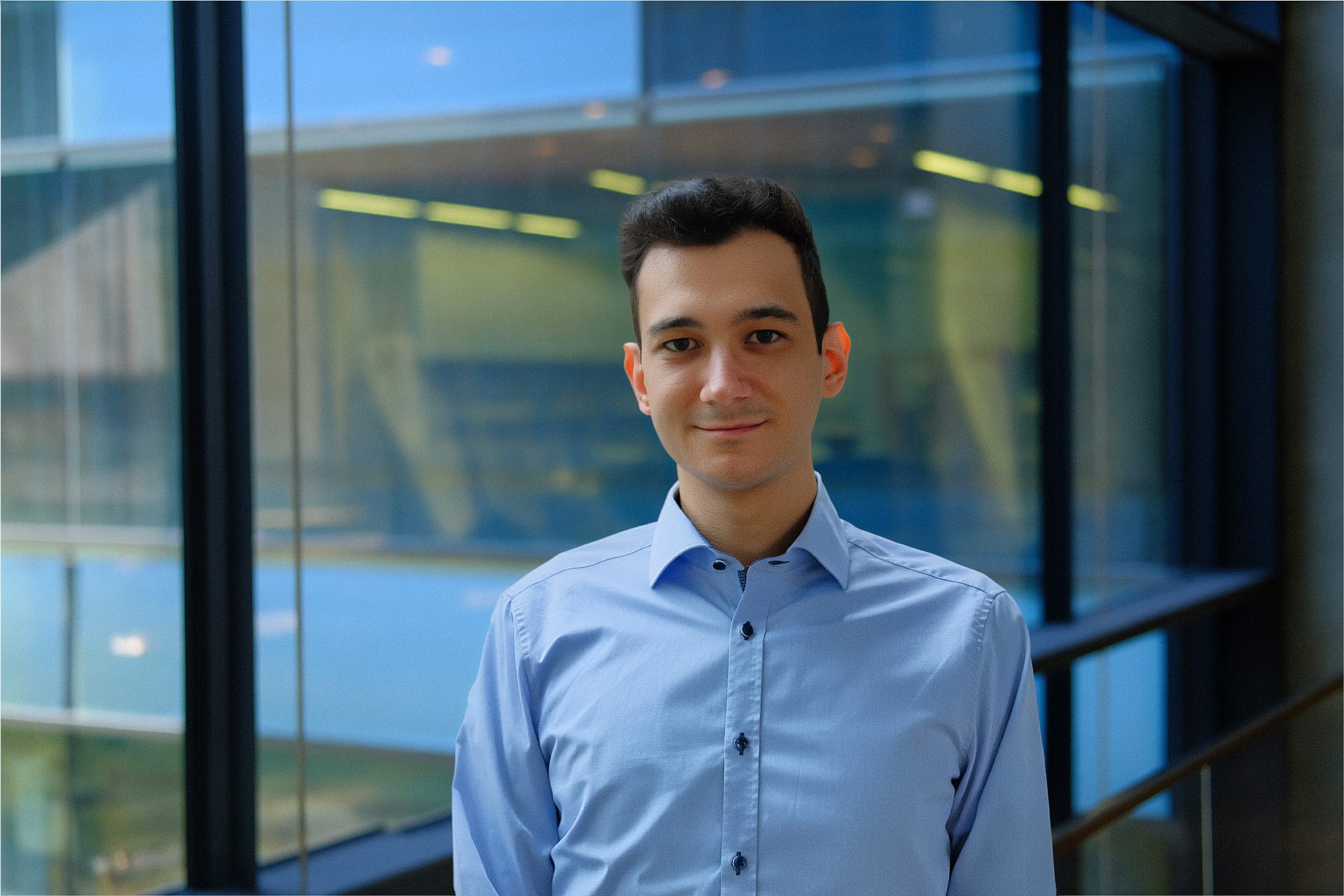


Inhaltliche Informationen
In this module, students acquire the ability to independently research a topic in the field of digital business and analytics according to scientific criteria. Working on the seminar paper, followed by a presentation and discussion of the results, promotes the rhetorical skills and social competence of the participating students.
The topics offered relate in particular to business interests or fall within the scope of the institute's current research projects and are relevant to practical issues.
Depending on the subject area, individual literature is recommended.
Organisatorische Informationen
Next event start date: Winter semester 2025/2026
Location: Online – all further information on Moodle
Dates:
- Submission of seminar papers: Date to be announced in good time.
- Final presentation: Time and place to be announced in good time.
ECTS: 4
Seminar (2 SWS) (Written assignment, presentation materials and presentation as part of a seminar lecture)
Credit points are awarded on the basis of the complete processing of an assigned topic (presentation and written paper) as well as participation in the discussion. Registration for the examination does not require proof of performance.
The module grade corresponds to the result of the module examination. The grade for the module examination is based on the grades for the written paper and the presentation. The calculated grade for the module examination is entered and reported in the transcript of records as an examination performance.
Focus subjects: The seminar is particularly suitable for students who wish to write their thesis at the Institute for Business Analytics.
Degree programmes: M.Sc. Economics, M.Sc. Business Mathematics, M.Sc. Business Chemistry, M.Sc. Business Physics, M.Sc. Sustainable Business Management, M.Sc. Business Informatics and degree programmes with Economics as a minor subject.