


MiMiWin II – Microorganisms as Helpers in Climate Protection
(Funded by MWK-BW from 2025 to 2028)
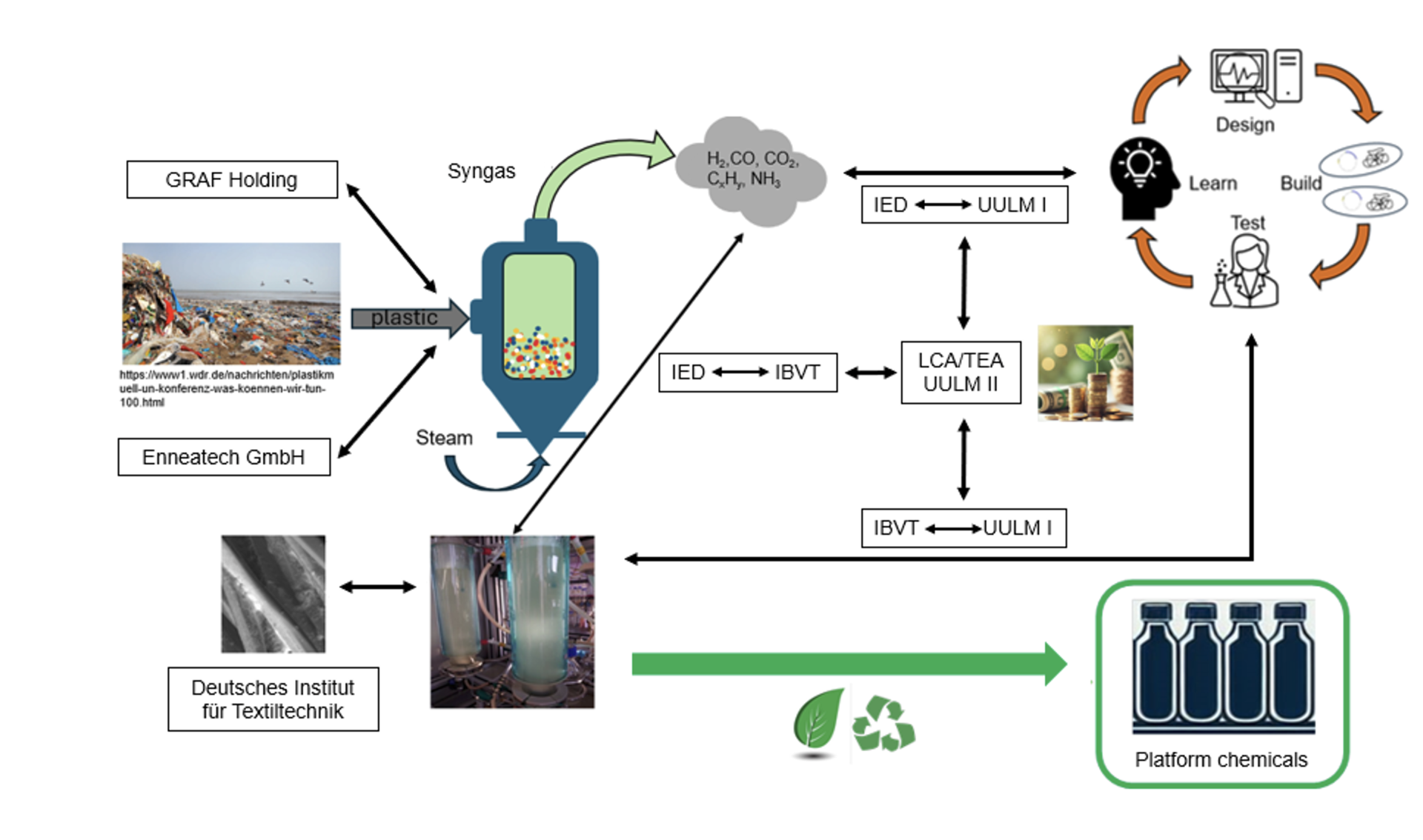
The research project MiMiWin II ("Mixed Plastics: From Problem to Solution Through Valorization with Microorganisms") is dedicated to the sustainable and forward-looking utilization of mixed plastics, which have so far been considered as problematic waste that is difficult to recycle. By combining innovative gasification techniques with microbiological processes, mixed plastic waste is to be converted into reusable materials for the chemical industry. Our goal is to use microbial metabolic activities to transform waste, which has been converted into energy-rich gas, into valuable basic chemicals such as acetate, butyrate, ethanol, butanol, and isobutanol, thus making an important contribution to the establishment of a circular bioeconomy that utilizes local resources.
As part of the project, we are working together with researchers at the Institute of Biochemical Engineering (IBVT) and at the Institute for Energy Process Engineering and Dynamics in Energy Systems at the University of Stuttgart in an interdisciplinary manner. At the IED, mixed plastics such as Styrofoam, food packaging, foams, and building materials are first broken down into their basic gaseous molecular components using combustion technology. Afterwards, at the IBVT, acetogenic anaerobic bacteria convert these gas mixtures into valuable chemicals through gas fermentation, which can be used, for example, as ingredients in paints, de-icing agents, and cleaning products.
The project is funded under the funding line "Microorganisms as Helpers in Climate Protection," and the promising results from the first funding phase have led to the project being extended for another three years and continuing to be supported by the Ministry of Science, Research and the Arts Baden-Württemberg. With its innovative approach of converting mixed plastic waste into valuable products using microorganisms, MiMiWin II is setting an important impulse for a climate-neutral future and the sustainable use of resources.
This project is funded by the Baden-Württemberg Ministry of Science, Research and Arts.
