



MPK & Ethics

Human Resources Competence Module – MPK
“You’re just doing a part-time job with endless holidays” – prospective and experienced teachers alike are certainly confronted with prejudices like this. Yet such statements fail to recognise the wide range of challenges and pressures that secondary school teachers – and teachers in all other schools – face and must overcome: A heavy workload, the blurring of boundaries between public and private life, the inherently open-ended and unfinished nature of the work, meeting a wide range of expectations, and the limited opportunities for ‘career progression’.
Nevertheless, the teaching profession, like almost no other, offers the opportunity to put one’s individual ideas about education and upbringing into practice and realise them within the school setting. Motivation, one’s attitude towards the profession and certain basic skills and abilities are, alongside subject knowledge, key characteristics of suitability for teaching.
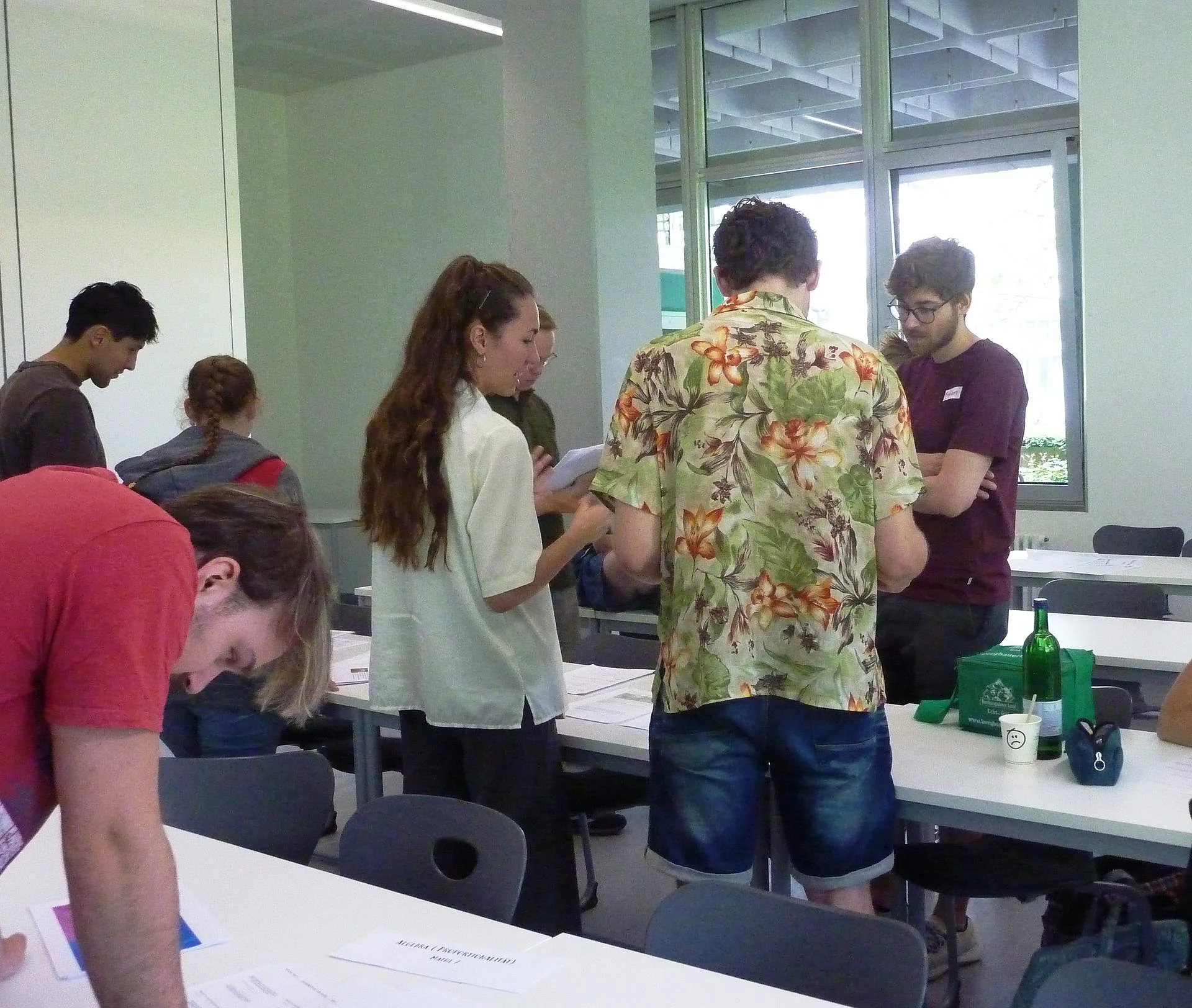
The ‘Personal Competence Module’ (MPK), structured in two parts, is designed to offer trainee teachers the opportunity to engage with both experienced teachers and those just starting out in their careers, and to exchange experiences. The aim is to provide you with impetus for training in specific areas of communication, practical and social skills that will help you to deal effectively with the day-to-day challenges of school life.
Ethics
One of the fundamental questions in ethics is whether we are allowed to do what we want. – As a scientific discipline, ethics engages with morality (or moralities) and their respective rules, values and norms in a way that questions, justifies and clarifies them.
In doing so, ethics enquires into the nature of the good and the norms that can be derived from it for a successful individual and social way of life. The question is therefore: What should I do?
To this end, ethics provides reliable and universally applicable criteria for assessing moral action within the meaning of everyday life. Kant’s categorical imperative is an example of this.
Alongside this general justification of morality – within the meaning of understanding ethical models, fundamental concepts and principles – its application to both our individual and collective actions, and particularly in relation to specific fields such as Medicine, science, technology, the environment and the economy, also plays a decisive role.
Our ethics seminars are designed to provide you with both the theoretical foundations of ethics as ‘general ethics’ and its application in ‘applied ethics’, so that you can begin to address the question: ‘What should I do?’, and perhaps even go some way towards answering it.
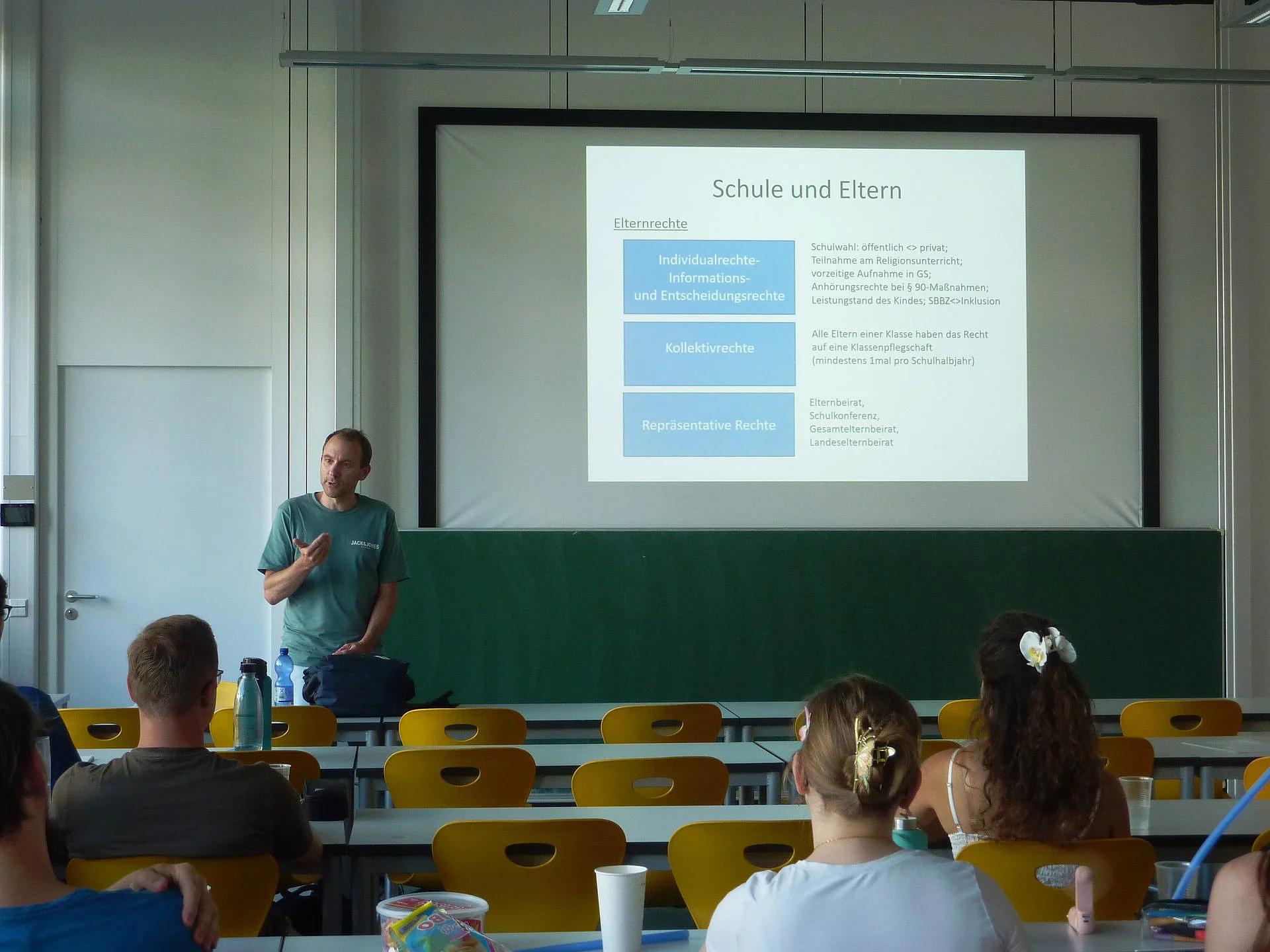
School and Civil Service Law

Voice Training
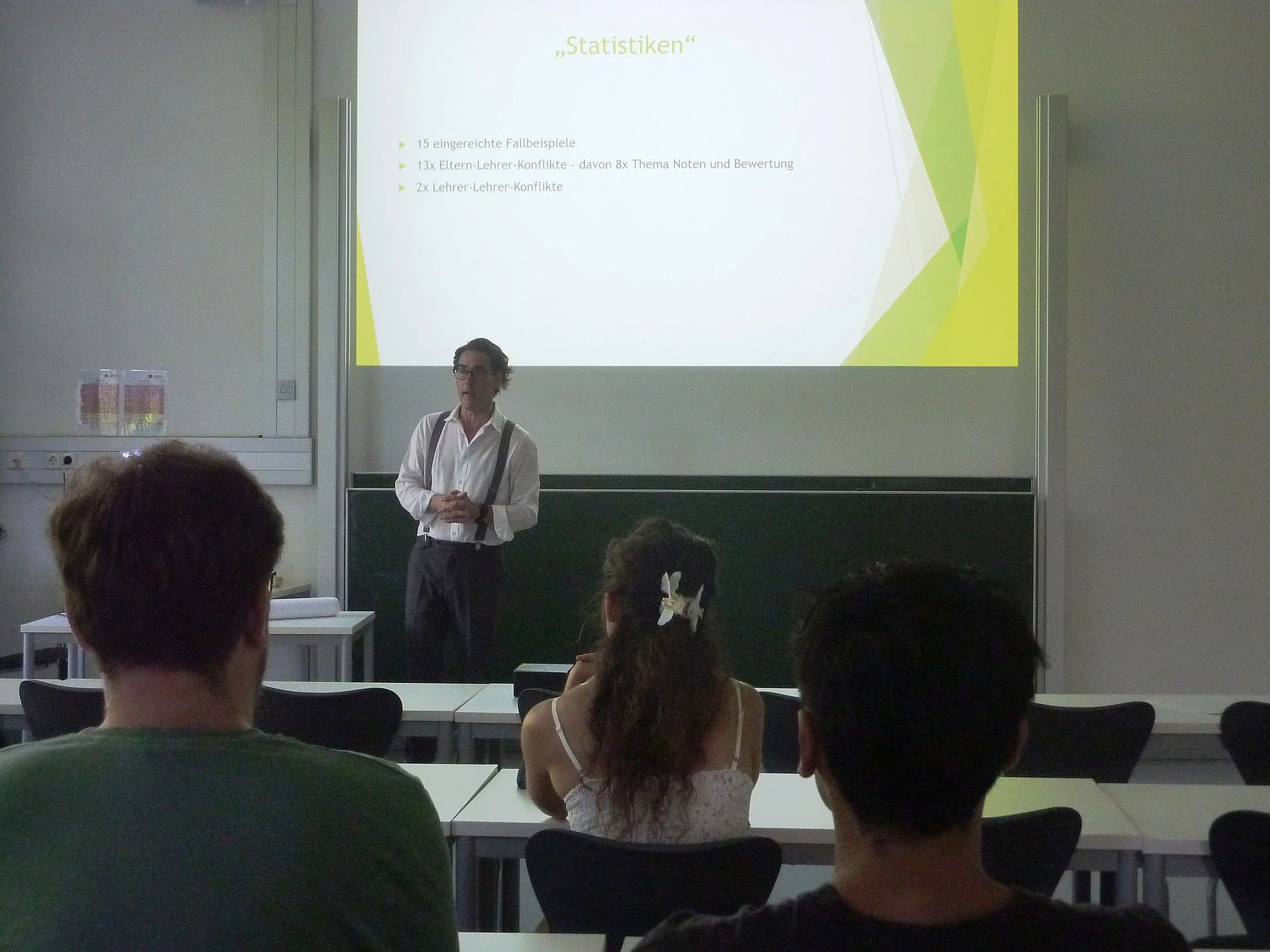
Conflict Situations

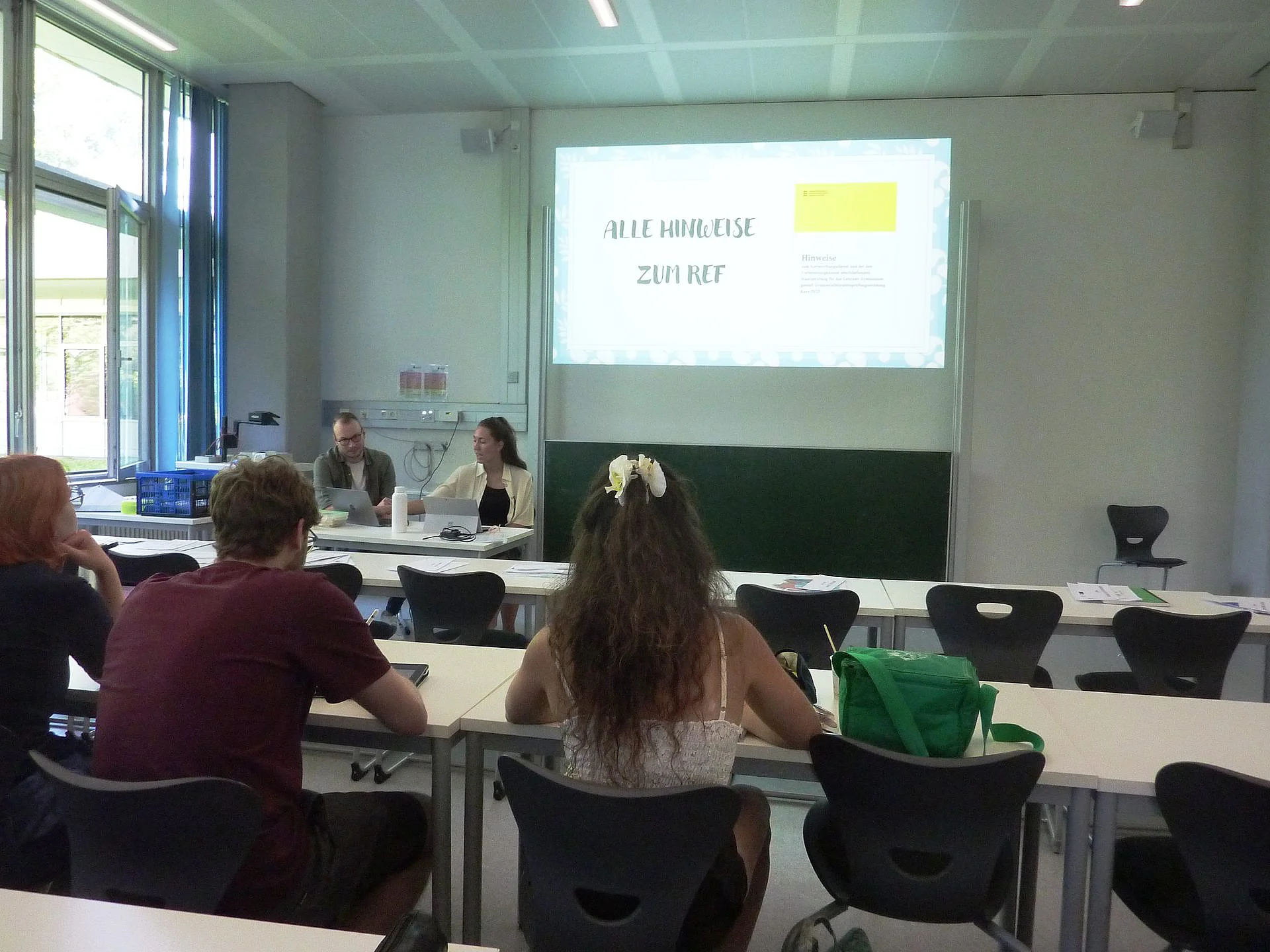
Lesson preparation

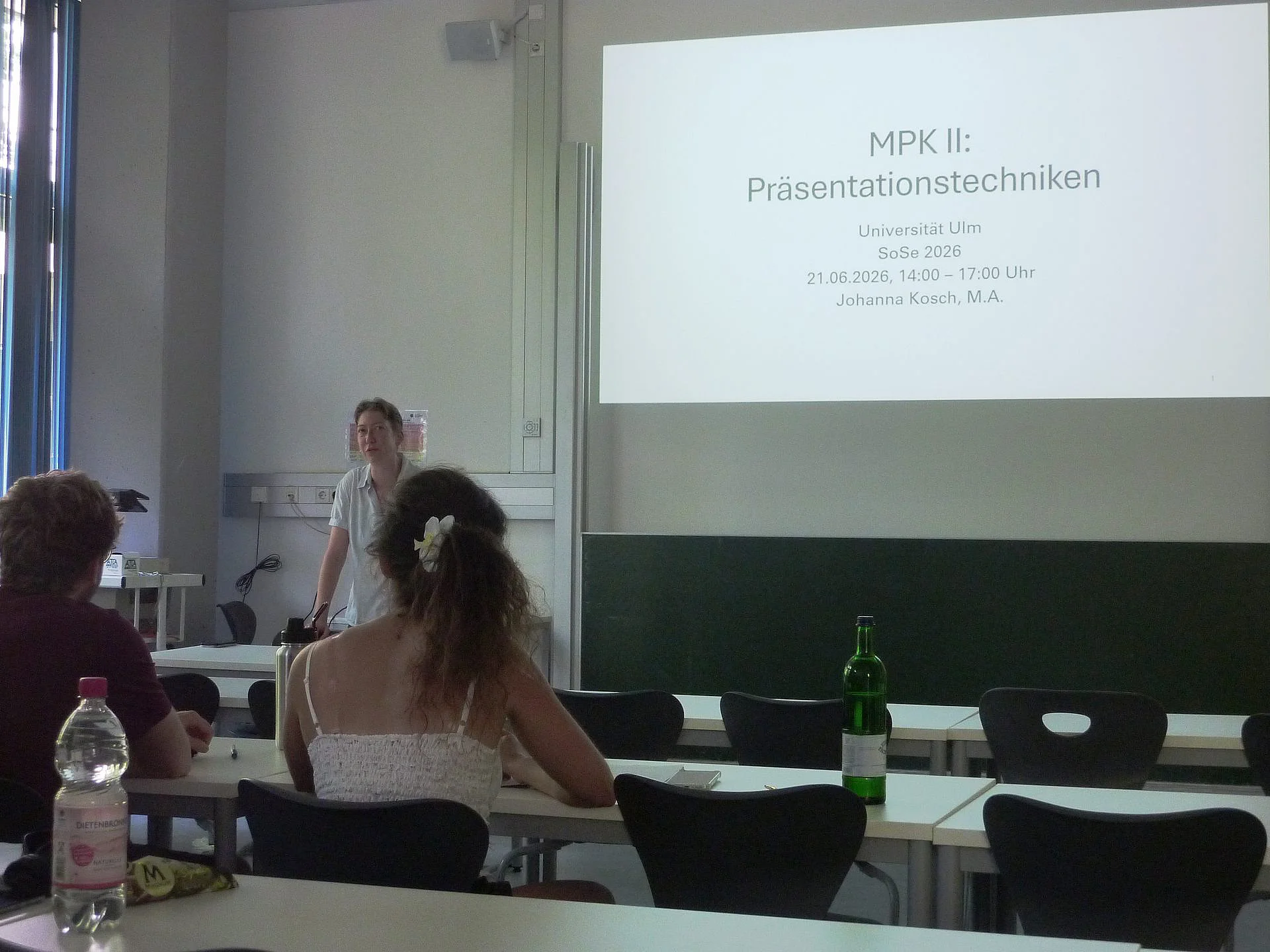
Presentation techniques

MPK

Ethik
General
In addition to scientific and subject-specific training, teacher training also involves the development of abilities and personal skills that are crucial to the teaching profession, such as personal development and the acquisition of practical and social skills.
To this end, a team of lecturers from various fields of educational pedagogy – ranging from theatre education to secondary school teaching – has been formed at Ulm University; this team also addresses issues relating to school law.
The two modules, MPK I and MPK II, are compulsory as part of the teacher education (programme) and are each worth 4 credit points. The modules are not graded.
Learning objectives and content of the MPK modules
The MPK modules have the following learning objectives:
- Developing personal demeanour and vocal delivery;
- Identifying and resolving communication barriers in schools;
- To recognise and resolve conflict situations in schools;
- To recognise the various dimensions of pedagogical responsibility.
The MPK modules cover the following topics:
- Posture and voice training;
- Communication and interaction in the teaching profession;
- Conflict resolution in schools;
- Aspects of school law;
- Teachers’ responsibilities and the ethos of the teaching profession.
General Information
Notes on the profession-specific specialisation: Ethics at Ulm University
Ethics is an integral part of the Educational sciences in the Bachelor’s and Master’s degree programmes for Teacher Education at German grammar schools (Gymnasium). In both the Bachelor’s and Master’s programmes, seminars on ethics can be attended and credited as part of the module ‘Professional Specialisation in Educational Sciences/Ethics’.
- The ethics seminars in the Bachelor’s programme deal with fundamental ethical and philosophical questions (B.A. BiWi Ethics).
- The ethics seminars in the Master’s programme deal with subject-specific and profession-specific issues (M.A. BiWi Ethics).
Certificates of achievement are marked and contribute 4 LP towards the overall grade for the scientific examination for Teacher Education. The following count as certificates of achievement or examinations: presentations, term papers and written examinations.
Naturally, the ethics seminars are also creditable for all other students across all disciplines, such as ASQ, Philosophy as a minor subject, additional qualifications, etc.
Learning objectives and content of the ethics seminars (BA and MA/Teacher Education)
The ethics seminars within the Bachelor’s programme cover the following learning objectives:
- Knowledge of fundamental ethical and philosophical questions and basic concepts
- Ability to analyse ethical and interdisciplinary issues using illustrative examples
- Placing ethical concepts within their respective historical contexts
- Awareness of ethical issues and problem areas in social, scientific and professional contexts
In terms of content, the ethics seminars within the Bachelor’s programme focus on the following aspects:
- Fundamental conceptual distinctions in ethics
- Major theories and concepts in ethics
- Ethical dimensions and issues in scientific research
- An introduction to specialist areas of applied ethics and sector-specific ethics
The ethics seminars within the Master’s programme aim to achieve the following learning objectives:
- The ability to reason and make judgements regarding exemplary ethical aspects within the individual subjects
- Competence in addressing issues of professional ethics
In terms of content, the ethics seminars within the Master’s programme focus on the following aspects:
- Fundamental approaches and methods of interdisciplinary applied ethics
- Ethical dimensions and issues within the respective subject area in the context of sector-specific ethics
- Professional ethical issues and the formation of ethical judgements
- The societal significance of the respective subject
Filter Courses in WS 26/27 by fields
All areas
Self-competence and working methods
Media and social competence
Philosophy and society
School and education | MPK
Foreign languages and intercultural competence
Arabic
Chinese
Danish
German as a foreign language
German sign language
English
French
Italian
Japanese
Portuguese
Russian
Swedish
Spanish
Contact Person

Dr. Katja Springer
Koordinatorin MPK & Ethik für Lehramtsstudierende
Raum 35 Department-Pavillon
Telefon: +49 (0)731/50-23466
Key to abbreviations
*HL – For teacher-training students only as an MPK; not an ASQ
*NF – Can be taken as an ASQ module worth 3 ECTS or as a minor subject worth 3, 4 or 6 ECTS (with a term paper), depending on the study regulations
Courses without a footnote or restriction are open to all students as an ASQ or elective.