


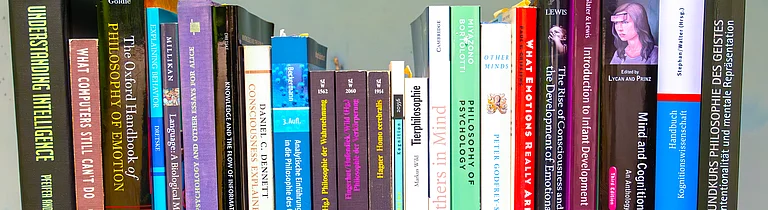
Philosophy of Mind and Cognition
The philosophy of mind and cognition is a branch of Philosophy that deals with fundamental questions such as what the mind and cognition are, how they can be explained scientifically, what perception and emotions are, and what it means to speak of ‘mental illnesses’ and how they can be categorised.
Research focuses
At the Humboldt Centre, a key research focus is on theories of emotion: What are emotions? How does the mind-body problem manifest itself in relation to emotions? What kind of representational content do emotions have, and in what ways are they embodied and socially situated? Of particular interest, too, are epistemological questions concerning the study of emotions, as well as questions at the interface with social theory, which touch upon, for example, the relationship between emotions and social practices, and between emotions and ideology.
One research focus is embodied and situated cognition, a research tradition that is equally relevant to Philosophy, Psychology and robotics. The focus is particularly on questions concerning the nature of mental representations, the mind–body relationship, and the embodiment and situatedness of emotions. Of particular interest, too, are epistemological questions concerning the study of embodiment and situatedness, as well as questions at the interface with social theory, which, for example, touch upon the relationship between embodiment, situatedness, social practices and ideology.


Current projects & collaborations
Research in the field of the philosophy of mind and cognition is closely linked to questions of the philosophy of science and social theory. There is currently a collaboration with the DFG network ‘Critical Emotion Theory’.
Current projects focus on
- Embodied Cognition and situated cognition in the context of ideology
theory - Emotions in the context of hierarchically and egalitariansly organised communities
PhD in Digital Ethics
PhD projects in the field of philosophy of mind and cognition in Ulm are typically linked to the research topics of emotion theory or Embodied Cognition. Interfaces with the philosophy of science and political epistemology, as well as with social philosophy, are of particular interest. Furthermore, it is possible to link research projects to other subjects (particularly Psychology and Computer Science). An award of a doctoral degree (Dr. phil.) is made in accordance with the doctoral degree regulations of the Faculty of Engineering, Computer Science and Psychology.


Emotions, Habits, and Skills
Rebekka Hufendiek
This paper argues that emotional habits emerge through the ongoing interaction between embodied patterns and social structures. Emotions are understood as embodied and action-oriented responses that are directed toward affordances in the social environment. This approach is better equipped than psychological constructivist theories to explain how bodily responses, social practices, and social structures interact in the formation and shaping of emotions.
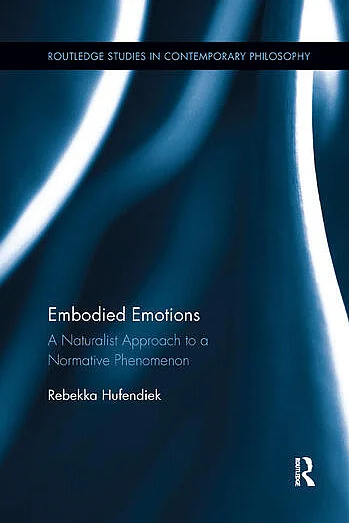
Embodied Emotions An Naturalist Approach to a Normative Phenomenon
Rebekka Hufendiek
In this book, Rebekka Hufendiek explores emotions as embodied, action-oriented representations, providing a noncognitivist theory of emotions that accounts for their normative dimensions. Embodied Emotions focuses not only on the bodily reactions involved in emotions but also on the environment within which emotions are embedded and on the social character of this environment, its ontological constitution, …
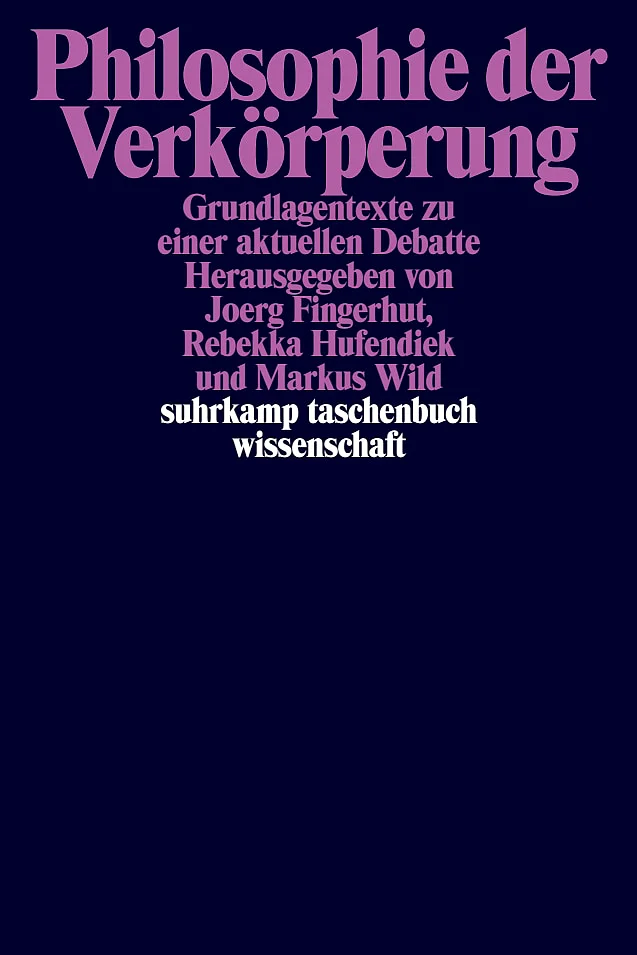
Philosophy of Embodiment
Hg.: Joerg Fingerhut, Rebekka Hufendiek, Markus Wild
When they hear the term ‘cognition’, most people think of the brain, computer models or information processing. In the real world, however, we only ever encounter beings with bodies that are embedded in and active within an environment. Cognition does not take place in the mind, but in the world. This is the fundamental idea behind the philosophy of embodiment. This shift towards the body and the environment represents ...