Biology

Master of Science (MSc)

Biology

The English-taught research-oriented Master’s programme in Biology at Ulm University provides a high-quality education in biology, characterized by competencies in understanding complex biological systems and in the application of state-of-the-art methods and techniques.

More about the course

In the English-taught master's programme Biology at Ulm University, students acquire in-depth knowledge of biology with a focus on the research priorities of the biology department at the University of Ulm and special skills from the life sciences. In addition, students can choose modules from different areas of biology as well as medicine and thus set individual focal points.


Academic Degree

Master of Science (MSc)

Type of Study
  • Full-time
Admission Regulations

further information

Start of Study
  • each winter semester
Orientation Offer
Language of Instruction
  • English
Admission Requirements
  • No restriction
ECTS Credits

120

Standard Period of Study

4

Structure of the M.Sc. in Biology programme

Advanced skills in the life sciences
Elective module: Biology (for further details, see the study plan)
Elective area: Medicine
Semester 1
Advanced skills in the life sciences
Elective module: Advanced topics in biological resilience
Elective Area Excursion/Career prospects
Elective area: Medicine
Elective area: Cross-curricular skills
Semester 2
Advanced Methods in Biology
Elective module: Biology (for further details, see the study plan)
Elective area: Cross-curricular skills
Semester 3
Master’s thesis
Semester 4
  • Advanced skills in the life sciences
    Elective module: Biology (for further details, see the study plan)
    Elective area: Medicine
    Semester 1
  • Advanced skills in the life sciences
    Elective module: Advanced topics in biological resilience
    Elective Area Excursion/Career prospects
    Elective area: Medicine
    Elective area: Cross-curricular skills
    Semester 2
  • Advanced Methods in Biology
    Elective module: Biology (for further details, see the study plan)
    Elective area: Cross-curricular skills
    Semester 3
  • Master’s thesis
    Semester 4

Perfectly equipped

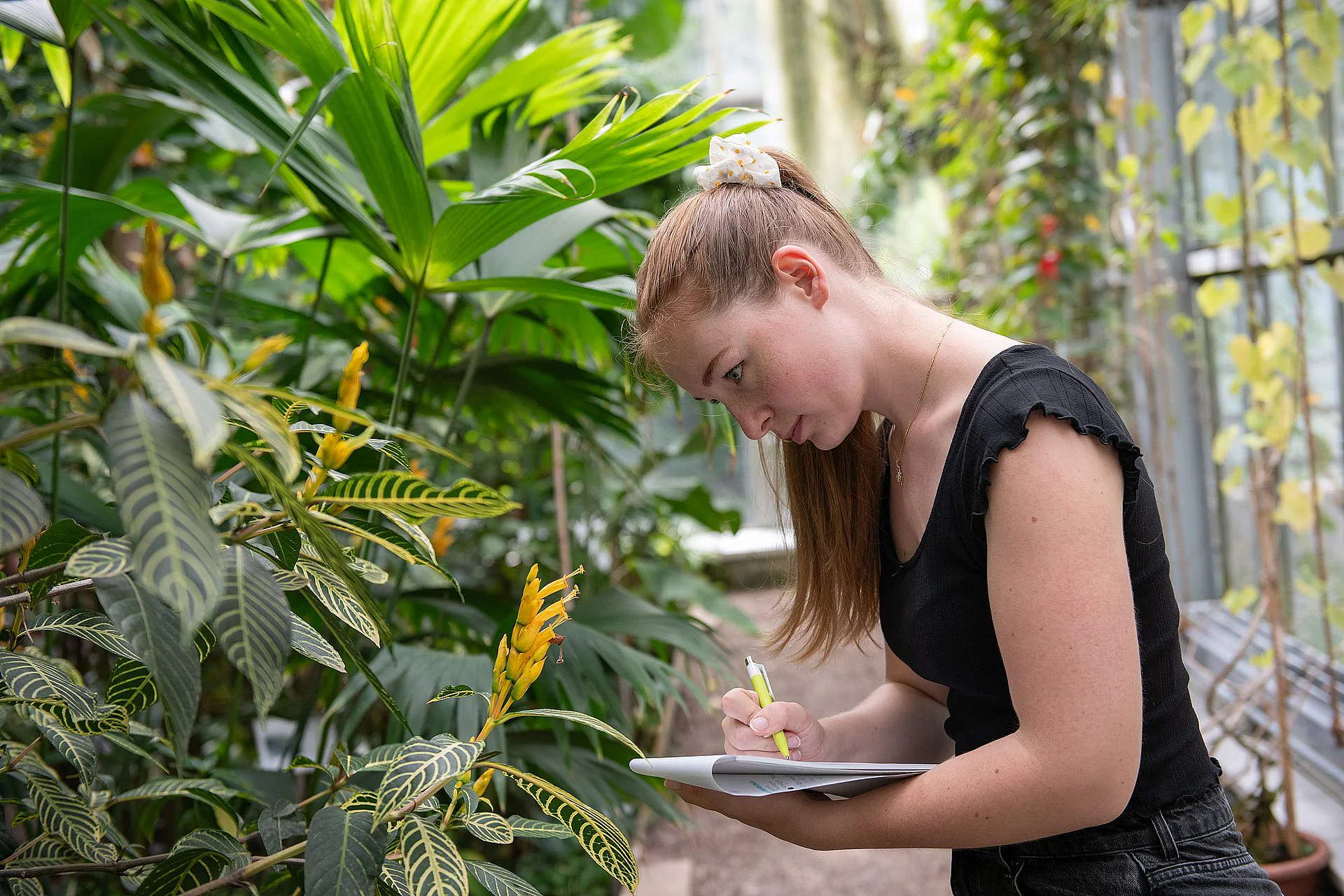
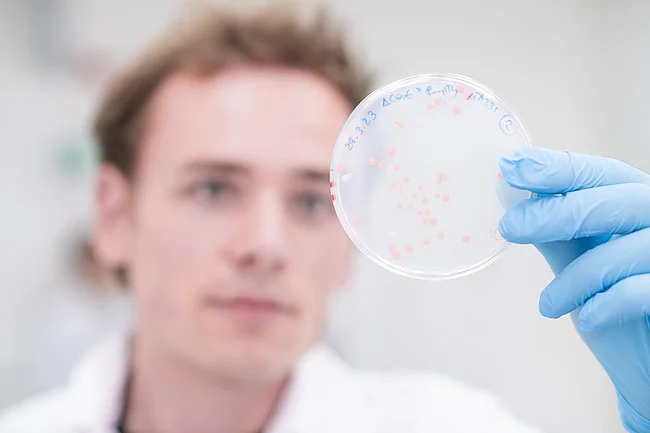
Our laboratories and teaching rooms are top-notch. After all, if you want to make a difference tomorrow, you shouldn’t be learning yesterday’s methods. A special learning space for our students is the Botanical Garden, one of the largest university gardens in Germany.

What’s it all about? A brief overview of the course content


We provide a sound grounding in biology, with a focus on the key research areas of the Department of Biology at Ulm University. In addition, you can choose modules from both the Department of Biology and the Department of Medicine, allowing you to tailor your studies to your own interests. Examples of possible areas of specialisation include:

  • Advanced microbiology
  • Cell biology & genetics
  • Conservation genomics
  • Endocrinology
  • Human biology
  • Molecular ecology and evolution
  • Molecular plant stress physiology
  • Neurobiology & behaviour
  • Tropical ecology
  • Virology

You can find detailed information in the programme guide.

Why Biology? A quick overview of the course objectives


Graduates of the Master’s programme in Biology …

… are able to think in a problem-oriented manner and apply the knowledge they have acquired to new questions…
are proficient in current methods used in the life sciences…
are able to collect, document and evaluate scientific data…
are able to understand current research topics and discuss them in a scientific context…
have developed the ability to work effectively in international research teams.

The aim of the programme is to provide a high-quality education in biology, characterised by expertise in understanding complex biological systems and in the application of state-of-the-art methods and techniques. The ability to solve problems independently is specifically fostered through scientific projects.

What makes Ulm special? A brief overview of the study environment


A weekend trip to Lake Constance or a climbing trip to the Alps? No problem at all from Ulm! Ranked as Germany’s most liveable city (Handelsblatt), Ulm offers an attractive mix of student life, cutting-edge academic research and excellent career prospects in the biopharmaceutical industry and other relevant economic sectors.

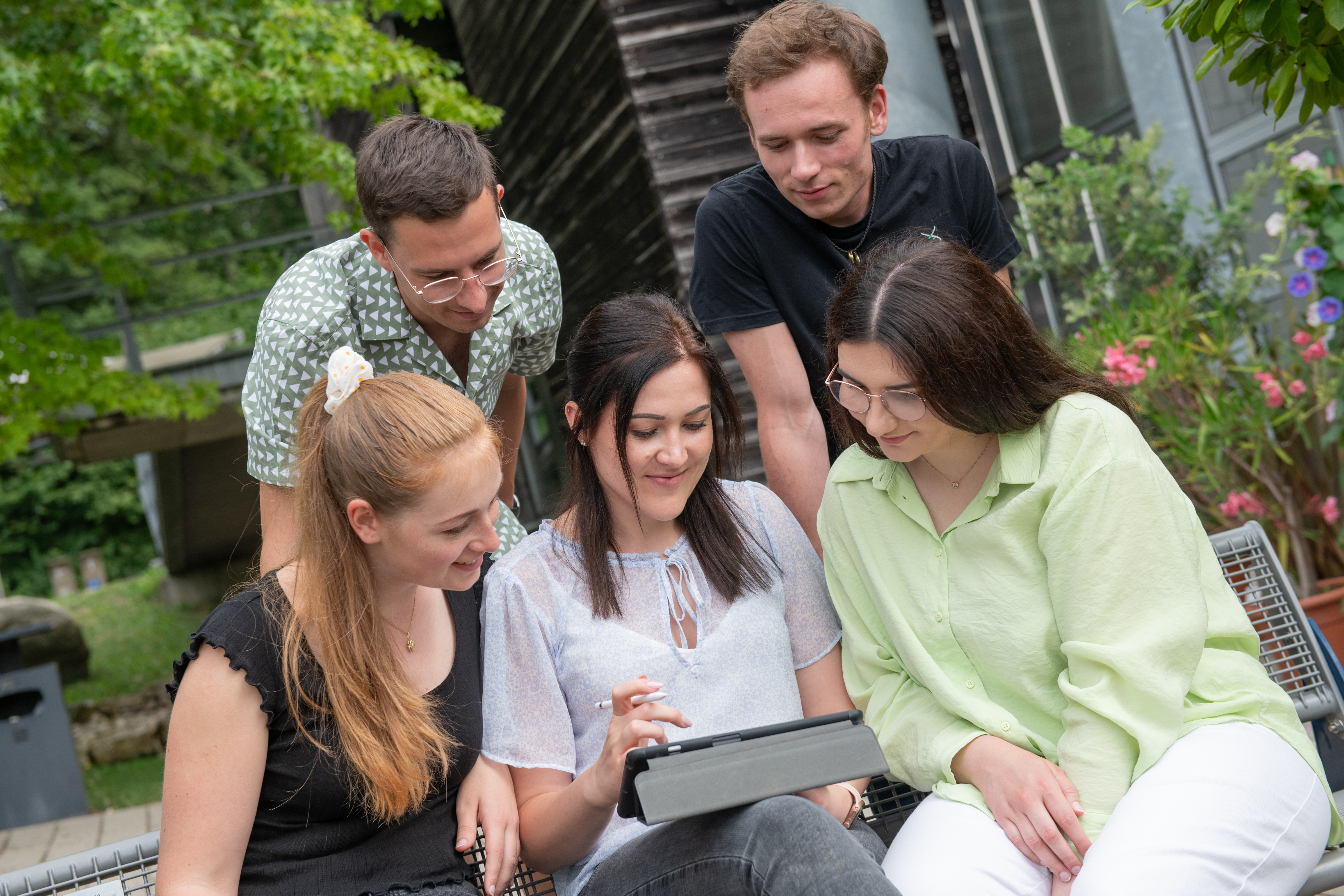
The Department of Biology fosters a personalised approach to student support. This creates close contact between students and lecturers. From an early stage in their studies, students get involved in current research areas and apply what they have learnt in a wide range of work placements. Small-group seminars and well-equipped laboratories contribute to academic success.

Ulm University stands out for its clear focus on medicine and STEM subjects (science, technology, engineering and mathematics), the outstanding quality of its teaching and its excellent research.

Field trips – a special way of learning

You have plenty of opportunities to build on what you’ve learnt during field trips both at home and abroad. The following excursions are currently on offer, for example: Tropical Ecology in Costa Rica, Marine Biotechnology, In Darwin’s Footsteps – Excursion to London and Cornwall, Alpine Excursion, Danube Floodplains, Summer School EcoSocMan.

Research focus: “Stress response and resilience in biological systems”

The degree programme is strongly influenced by the research focus of our Department of Biology. Global challenges such as climate change, animal and plant welfare, and sustainability are issues that occupy researchers worldwide. Our research focus is on resilience strategies in biological systems. During your studies, you will gain fascinating insights into this subject area. From molecular and biochemical laboratory work to organism-level experiments and field studies – you will be able to deepen your knowledge both through practical placements and in your final-year dissertation.

Ways to go abroad

A great way to broaden your horizons is to spend a study period at a university abroad. Students at Ulm University can apply to spend one or two semesters abroad at numerous universities: across Europe as part of the ERASMUS programme, and also outside Europe. The Department of Biology facilitates study abroad semesters by establishing a so-called ‘mobility window’. This makes it much easier for you to have academic credits earned abroad recognised.

Ulm University has exchange agreements with over 100 universities in 26 countries. Further information is available from the International Office.


International Office

Special exchange programmes in the Master’s in Biology: 

  • Exchange Programme Costa Rica – Since 1987, biology students have had the opportunity to study tropical biology for one or two semesters at the Universidad de Costa Rica.
  • Exchange Programme Taiwan – between the Department of Biology at Ulm University and the College of Life Sciences (National Taiwan University, NTU)

External content

To use this content (Source: www.xyz.de ), please click to Accept. We would like to point out that by accepting this iframes data to third parties transmitted or cookies could be stored.

You can find further information in our Privacy policy..

Studying at Ulm University

External content

To use this content (Source: www.xyz.de ), please click to Accept. We would like to point out that by accepting this iframes data to third parties transmitted or cookies could be stored.

You can find further information in our Privacy policy..

The university is celebrating in the city

External content

To use this content (Source: www.xyz.de ), please click to Accept. We would like to point out that by accepting this iframes data to third parties transmitted or cookies could be stored.

You can find further information in our Privacy policy..

A brief introduction to Ulm and Ulm University

And after graduation? Fields of work and career paths for life scientists

Regardless of their degree (Bachelor’s, Master’s or PhD), biologists work in a wide range of professional fields, for example at universities, in non-university research institutions, in government bodies or in industry:

  • Academic research
  • Research and Development in industry
  • Biopharmaceutical research
  • Biotechnology (genetic engineering)
  • Clinical research (e.g. cancer research)
  • Plant breeding
  • Environmental protection and analysis
  • Environmental biology (biodiversity, sustainability)
  • Hygiene
  • Water management
  • Measurement and laboratory technology
  • Patent law
  • Marketing
  • Sales and Quality Management
  • Journalism
  • Expert Assessment and Consultancy

Further information can be found on the website of the VBIO – Association for Biology, Life Sciences & Biomedicine in Germany:

Discover the career paths of UUlm graduates (pdf)

Ulm University has repeatedly been recognised as a top university with the StudyCheck Award.

Studying and living in Ulm

Welcome to “Germany’s most liveable city” (Handelsblatt 2024). In Albert Einstein’s birthplace, science, leisure, top employers and culture come together in a unique way. Top venues and events such as the Ulmer Zelt, Nabada and the Donaufest draw visitors to the quaint alleyways. You’ll feel right at home here!

Contact

Related Study Courses