


kiz Newsletter 12/2025
Dear readers,
As the year draws to a close, we would like to share some news with you.
Governance is new at BelWü (the high-performance network for all universities in Baden-Württemberg), and we wish the designated scientific spokesperson for BelWü, the head of kiz Prof. Dr. Wendzel, every success in his new role. In the field of information media, there is news about databases and e-book offerings: take advantage of our EBS models, where, for example, German-language Pearson textbooks will be available until April 2026. The extended opening hours at the library headquarters until 9 p.m. will continue from 7 January 2026, and Sunday opening will also be possible again during exam preparation. During Open Access Week, the Diamond Open Access model was presented, which is very promising for the future. The kiz website ‘Course offerings’ has been redesigned! In addition to progress from the HisInOne project, the good news is that the ‘Overleaf Commons Campus Licence’ has been extended until November 2026. All mobile devices that want to connect to eduroam should have the current profile installed. And last but not least, exciting news from the last bwHPC symposium in Tübingen...
Don't let the pre-Christmas rush get to you. Have a peaceful Christmas holiday and a happy New Year!
Your kiz PR team
Topics of this newsletter
Wissenschaftliche Informationsdienste



kiz
High-performance data network for all universities in Baden-Württemberg
The Baden-Württemberg extended LAN (BelWü ) coordination office, which has been providing the universities in Baden-Württemberg with a high-performance data network for more than 30 years, has been given a new organisational structure: Since the end of October, BelWü has been a cross-university operating unit in accordance with LHG § 6 para. 4 and is based at the University of Stuttgart.
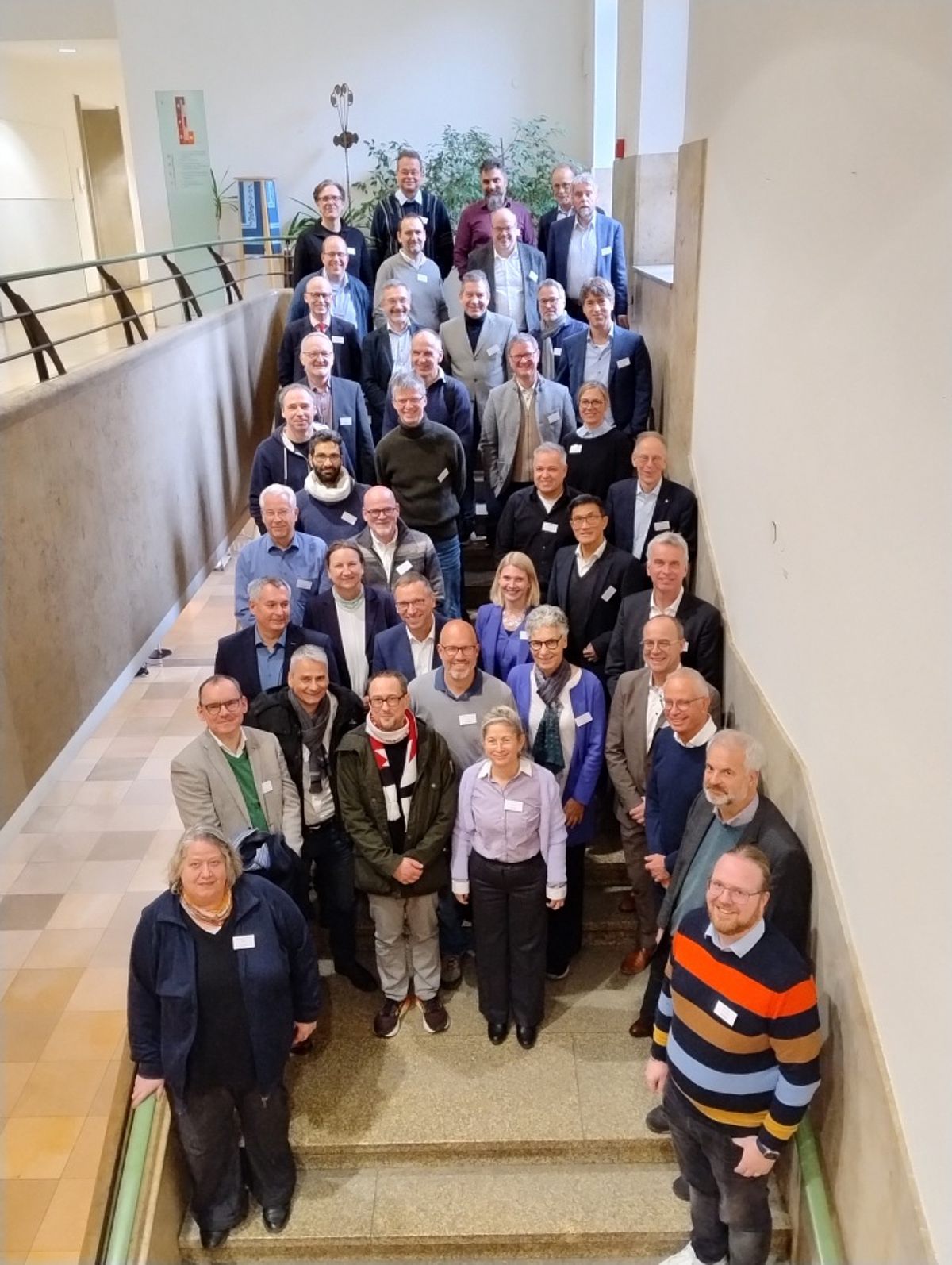
Over 40 participants from all universities and the MWK took part in the first sponsors' meeting at the University of Stuttgart.
In addition to the nine Baden-Württemberg universities, all non-university universities in the state, i.e. the universities of applied sciences, the universities of applied sciences, the universities of music and the arts and the Baden-Württemberg Cooperative State University (Duale Hochschule Baden-Württemberg), have also joined the new cooperation. At the first sponsors' meeting on 26 November at the University of Stuttgart with over 40 participants from all universities and the Ministry of Science, Research and the Arts (MWK), the following people were elected to the new steering committee:
- Dr Alejandra Lopez (University of Freiburg)
- Dr Martin Nussbaumer (KIT)
- Dr Katrin Schoppa-Bauer (University of Mannheim)
- Günther Aigle (DHBW)
- Andrea Linke (in future: Nürtingen University)
- Dr Tek-Seng The (University of Applied Sciences Ludwigsburg)
The work of the committee is supported by Anna Steiger (Chancellor, University of Stuttgart), Dr Simone Rehm (CIO, University of Stuttgart) and Peter Castellaz (Head of Division, MWK) by virtue of their office.
The already established technical committee will remain unchanged and a scientific spokesperson will be elected in the near future. This ensures the governance of the high-performance data network and lays the organisational and technical foundation for successful collaboration in the scientific community, ambitious research and innovative teaching in Baden-Württemberg.
(Text: University of Stuttgart, https://www.uni-stuttgart.de/universitaet/aktuelles/meldungen/Hochleistungsdatennetz-fuer-alle-Hochschulen-in-Baden-Wuerttemberg/)
The head of the kiz (Prof. Dr. Wendzel) is the designated scientific spokesperson for BelWü and, as such, usually attends the sponsors' meeting as a guest. Furthermore, if he is successfully elected, he will be involved in both the steering committee and the technical working group (TA).
Information on the availability of service points at the turn of the year 2025-2026
Due to the annual university-wide heating reduction over the turn of the year, there will unfortunately also be the following restrictions at our service points, the library centre, the IT consultation hours and the printing services. We hope for your understanding.
Service points are closed as follows:
- IT consultation hours: 19.12.2025 - 06.01.2026
- Help Desk: 24.12.2025 - 06.01.2026
- Print service point: 24.12.2025 - 06.01.2026
- Publication Management Service Point: 24.12.2025 - 06.01.2026
- Central Library: 22.12. - 23.12.2025: open from 8 a.m. to 6 p.m., 24.12.2025 - 06.01.2026 closed
- Helmholtzstraße library: 22/12 - 23/12/2025: open from 8 am to 4 pm, 24/12/2025 - 06/01/2026 closed
Deadlines for the acceptance of print jobs:

Use of the library
Closing days and extended opening hours during exam preparation
The following opening hours apply for the library centre until the end of the winter semester:
until 20.12.2025 and again from 07.01. until 17.01.2026:
| Mon - Thu | 08:00 - 21:00 |
| Fri | 08:00 - 18:00 |
| Sat | 10:00 - 18:00 |
| Sun | closed |
| On 22.12. and 23.12.2025: | 08:00 to 18:00 |
| From 24.12. to 06.01.2026: | closed (as part of the university-wide reduction in heating) |
| 19.01. to 08.03.2026 - extended opening hours | |
| Mon - Thu | 08:00 - 22:00 |
| Fri | 08:00 - 20:00 |
| Sat - Sun | 10:00 - 20:00 |
The Helmholtzstraße library is open continuously from Monday to Friday from 8 a.m. to 4 p.m. It will also be closed from 24 December 2025 to 6 January 2026.
The visitor figures for the changed opening hours will be statistically analysed and will be supplemented by online surveys of our reading room visitors at the beginning of 2026. The aim is to gradually adapt the opening hours to the current demand situation.
News in the area of e-media
You can also find an overview of the e-book packages licensed in the campus network on our website:
E-Books: Overview of offers
New platform for e-books: EBSCO Host expands portfolio
Purchase requests sent to the kiz are licensed directly on the publisher's platforms and indexed in the catalogue wherever possible.
Where this is not possible, so-called aggregators are available to us for licensing, although these have certain restrictions (e.g. with DRM). Until now, only the EbookCentral platform has been used.
From now on, the portfolio will be expanded to include a further provider and individually licensed e-books can also be offered on the EBSCO Host platform - depending on where the best licensing option is available.
As e-books are not necessarily available directly on the publishing platforms, it is always advisable to search for licensed content via one of our catalogues.
Catalogue:global - Resource Discovery System (RDS)
Catalogue:local - Online Public Access Catalogue (OPAC)
New e-book packages (year-spanning):
- Kohlhammer Psychology complete (from 1.12.2025)Link to the package
- JSTOR e-books: in addition to all JSTOR journals, all JSTOR e-books (until 2023) will also be available in our campus network from 1 January 2026. This includes, among others, the well-known American University Presses.
- SIAM e-books (including 2026)
New e-book packages for copyright year 2026:
- Elsevier German Medical Collection (Urban & Fischer),
- Elsevier book series Methods in Enzymology, Advances in Experimental and Social Psychology, Psychology of Learning and Motivation,
- Springer Computer Science (incl. LNCS),
- Springer Psychology,
- Springer Protocols
Current EBS models (Evidence Based Selection)
The following EBS models are still available until the end of April:
- Pearson text books German (until 30 April 2026, after which the most frequently used titles will be taken over) Link to the package
- Wiley e-books (until 30 April 2026, thereafter takeover of the most frequently used titles) Link to the package
New in the databases
Business Searching Interface: In addition to access to the Business Source Complete database via EBSCO Host, there is now a separate platform for First choice journals and magazines with the Business Searching Interface.
Statista: From 1 January 2026, access to Statista at Ulm University will only be possible after authentication (Shibboleth): Login link
Overviews and links to our licensed databases can be found as usual in the database information system DBIS.





Scientific information services
Open Access Week at the kiz
Open Access (OA) ensures free access to scientific information. During the International Open Access Week, kiz lecturers gave various presentations on topics such as the status of the OA transformation at Ulm University and author identification with ORCID (a persistent identifier for maintaining and managing your own author profile). The event was again organised in close cooperation with the Res.UL research funding programme and was well received by numerous external participants.
Furthermore, the topic of artificial intelligence (AI) was the central focus of several contributions. AI has become an integral part of scientific work. However, it raises copyright and ethical questions, which are particularly controversial with regard to OA publications and were explained in one presentation. OA publications are also suitable for training large language models due to their open licences. But do you want your own work to be used for this? A second presentation provided participants with guidelines on what they should consider with regard to their own OA publication.
For the first time, kiz gave a presentation on Diamond Open Access. The term is now used almost synonymously to describe new financing models supported by the community. Although article processing charges (APCs) are common in open access publishing, some journals work without them. Instead, publication is financed by institutions, sponsors or library consortia and not by payments from the authors. This model is known as Diamond Open Access. As more and more European and national research funding is made available for this, Diamond Open Access has become a beacon of hope for fair and sustainable Open Access.
Revision of the website "Our range of courses"
We have completely revised the website "Our range of courses"!
You can now find the courses that are relevant to you in various sections.
For example, we offer kiz courses on library orientation, an ASQ course on scientific writing, other courses on topics related to scientific work and courses specifically for PhD students and postdocs.
On the information pages for the individual courses, you can find out more about the content, scope and dates of the courses and can register directly in Moodle via a link.
We look forward to your participation!

Research data management courses with a new title
We now offer four self-study courses on research data management. We have renamed the courses to make it easier to distinguish between them.
Our basic course is now called
"Research Data Management - Fundamentals of Skills for All Disciplines" (in German)
"Research Data Management - Basic Skills for All Disciplines" (in English)
The advanced course is called
"Research Data Management for Advanced Learners in All Disciplines" (in German)
"Research Data Management for Advanced Learners of All Disciplines" (in English)
Registration is possible at any time via Moodle.
Campus & Business
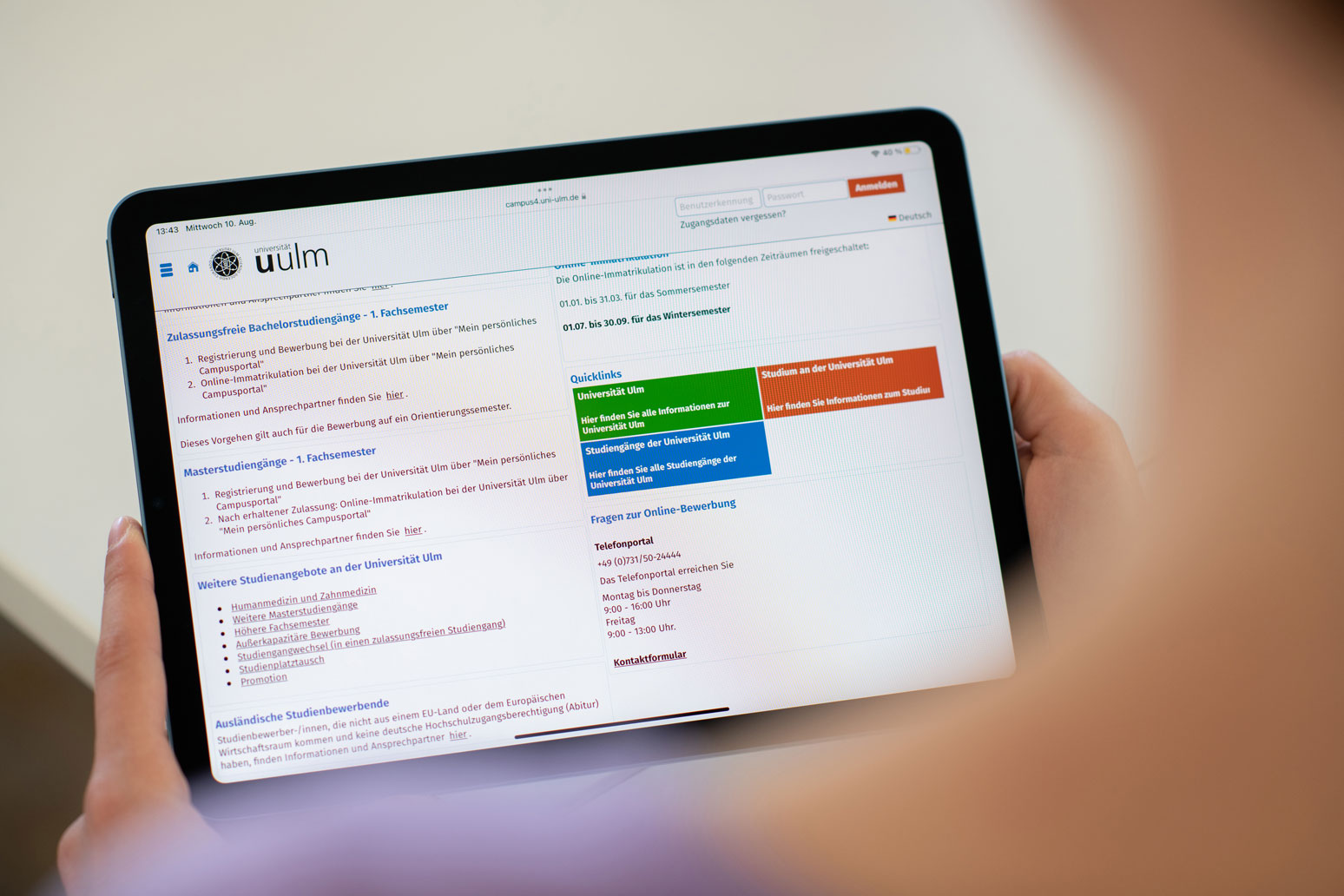
News from the HISinOne project
Application and admission (APP):
The application and admission procedure for higher semesters (in the programme) in Dentistry has been successfully integrated into APP. In the current quarter, the final procedures will be converted so that the old ZUL GX system can be decommissioned - including the procedure for the Master of Education Teacher Education programme.
Student Management (STU):
The STU module is running smoothly. From Q4, applicants will be able to upload their enrolment documents online. In addition, the student file will be converted to a new document management system so that certificates can be accessed directly in digital form on the campus portal in future.
Examination and event management (EXA):
The project launch of HISinOne EXA was successfully completed in the current year. All those involved were informed about the objectives and procedure at several events, and new communication channels were established with the project team. The current focus is on technical planning: in a workshop in June, the Ulm University processes were harmonised with the HIS eG reference model. Progress is also being made with data migration - the first test migration has already been successfully carried out together with the service provider LomaNext.
Personalised services and directories (PSV):
The link between SVA and HIO is scheduled for the end of November. In the course of this, new employees will be automatically transferred from SVA to HIO when they are hired or their employment changes and assigned to the corresponding organisational unit with the role "employee" according to their employment cost centre in SVA. At the same time, a joint, valid organisational structure for bwReise and HIO is being established. Work is also underway to introduce a decentralised assignment of roles in order to relieve the pressure on resources in kiz in the long term.
Chip card, student ID card - new function activated
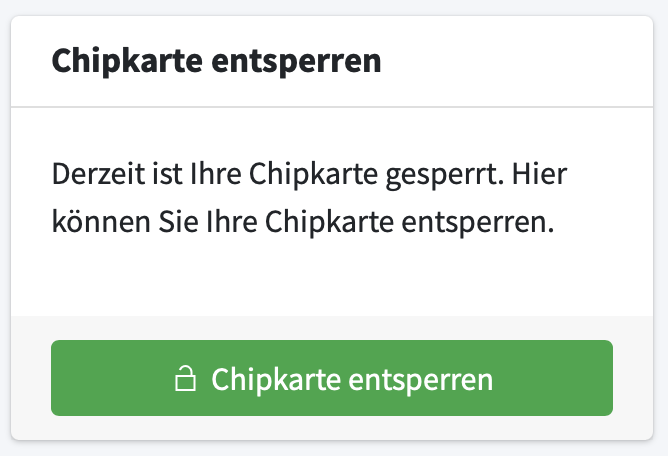
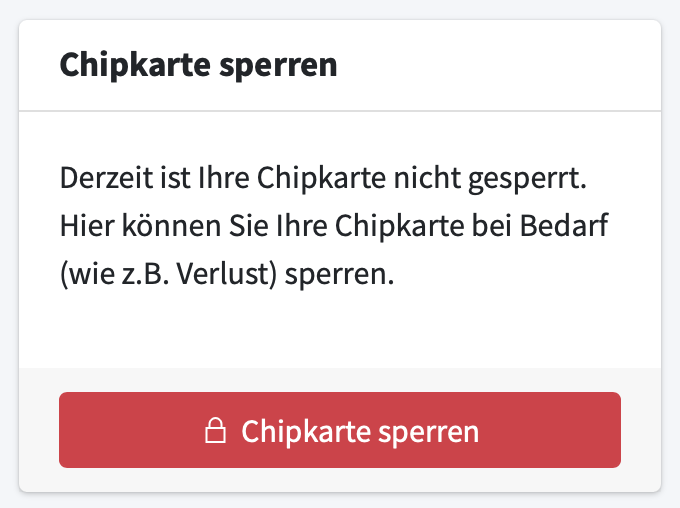
From now on, your membership card can be blocked and unblocked at any time via the Identity Management (IDM) system.
So if you have misplaced your chip card and don't know where it is, you can block it immediately using the self-service procedure. This ensures that no unauthorised person can misuse your membership card. Now you have time to look for your missing chip card, student ID card. If it turns up again, you can also unblock it via the IDM and continue to use it as usual. Otherwise, contact the issuing office responsible for you and have a new membership card issued.
Unfortunately, it is still not possible to block the Studierendenwerk (student services) credit balance for technical reasons.
Depending on the time of unblocking/blocking, it may take up to 24 hours for this to be complete.
Network & Software
Need for action with eduroam
eduroam users who set up access to eduroam before 3 June 2025 should delete existing eduroam profiles on their devices before 2 January 2026 and install the current profile. On this date, the certificate used by our authentication server to prove its identity will expire. The new certificate comes from a different certification authority that is not trusted by the mobile device with the eduroam profile that was distributed before 3 June 2025.
In order to be able to use eduroam without any problems after 2 January, it makes sense to install the new profile on all mobile devices that connect to eduroam now. You can find the profile at https://www.uni-ulm.de/einrichtungen/kiz/service-katalog/netzwerk-konnektivitaet/wlan/eduroam/ or simply scan the QR code.

Extension "Overleaf-Commons - Campus licence"
As part of an evaluation phase, a campus licence for the web-based LaTeX editor "Overleaf-Commons" was made available to members of Ulm University from 1 February 2025. Due to the high usage figures and the very positive feedback on the service, we are very pleased to inform you that the campus licence has initially been extended until 21 November 2026. A further extension is currently being examined.

Scientific computing
11th bwHPC Symposium in Tübingen
On 23 September 2025, 76 researchers, HPC operators and the bwHPC support team came together at the 11th bwHPC Symposium in Tübingen to discuss current topics and methods in high-performance computing. Following the welcome address by Oliver Roll (Ministry of Science, Art and Culture), the day was characterised by eleven presentations.
The contributions ranged from quantum and astrophysics to climate modelling, interactive AI and research software engineering. Prof. Steffen Wendzel (Head of the Ulm University's kiz also took part, speaking on the topic of "Detection of Network Information Hiding Artifacts - A Case for HPC?". As a recognised expert in IT security and networks, he illustrated his topic with an allegory from ancient Greece: a messenger's head was shaved, a map tattooed on his scalp and the hair allowed to grow back before he passed through enemy lines with the hidden message. - A Case for HPC?
Participation in the symposium is free of charge for all female scientists. The next symposium will take place in Constance in autumn 2026
Further information:
- Complete press release: https://www.bwhpc.de/927.php
- To register: https://wiki.bwhpc.de/e/Main_Page